Saturday, 28 February 2026

Everything announced at MWC 2026: The new Leica Leitzphone by Xiaomi, Honor's ultra-thin MagicPad 4 and more

MWC 2026 officially gets underway on March 2 and will continue through March 5, but the announcements are already coming ahead of its start. We can always count on the annual tech event to bring tons of new phones, laptops and tablets, and we're expecting to see some robots and other gadgets too — plus plenty of AI news, of course. In addition to the announcements, MWC is our chance to get hands-on time with some of the most interesting new devices, like the Xiaomi 17 Ultra.

We'll be updating this story as the week goes on to keep you in the loop on everything that caught our attention, so keep checking back here for the latest MWC news. 

Xiaomi kicked off MWC this year by announcing the global launch of its 17 Ultra smartphone, which debuted first in China back in December. It's unclear if the phone will ever come to the US, but it's now rolling out in Europe. Xiaomi teamed up again with Leica to make a photography-focused smartphone, and the 17 Ultra sports a 1-inch 50-megapixel camera sensor with a f/1.67 lens, a telephoto setup with a 200MP 1/1.4-inch sensor, and a 50MP ultrawide camera. There's also a manual zoom ring around the camera. 

Check out our hands on for our first impressions of what it's like shooting with the Xiaomi 17 Ultra. And there's more to it than just the camera. The 17 Ultra has a 6.9-inch OLED 120 Hz display that peaks at 3,500 nits of brightness, and a 6,000mAh silicon-carbon battery. The Xiaomi 17 Ultra starts at £1,299 (roughly $1,750).

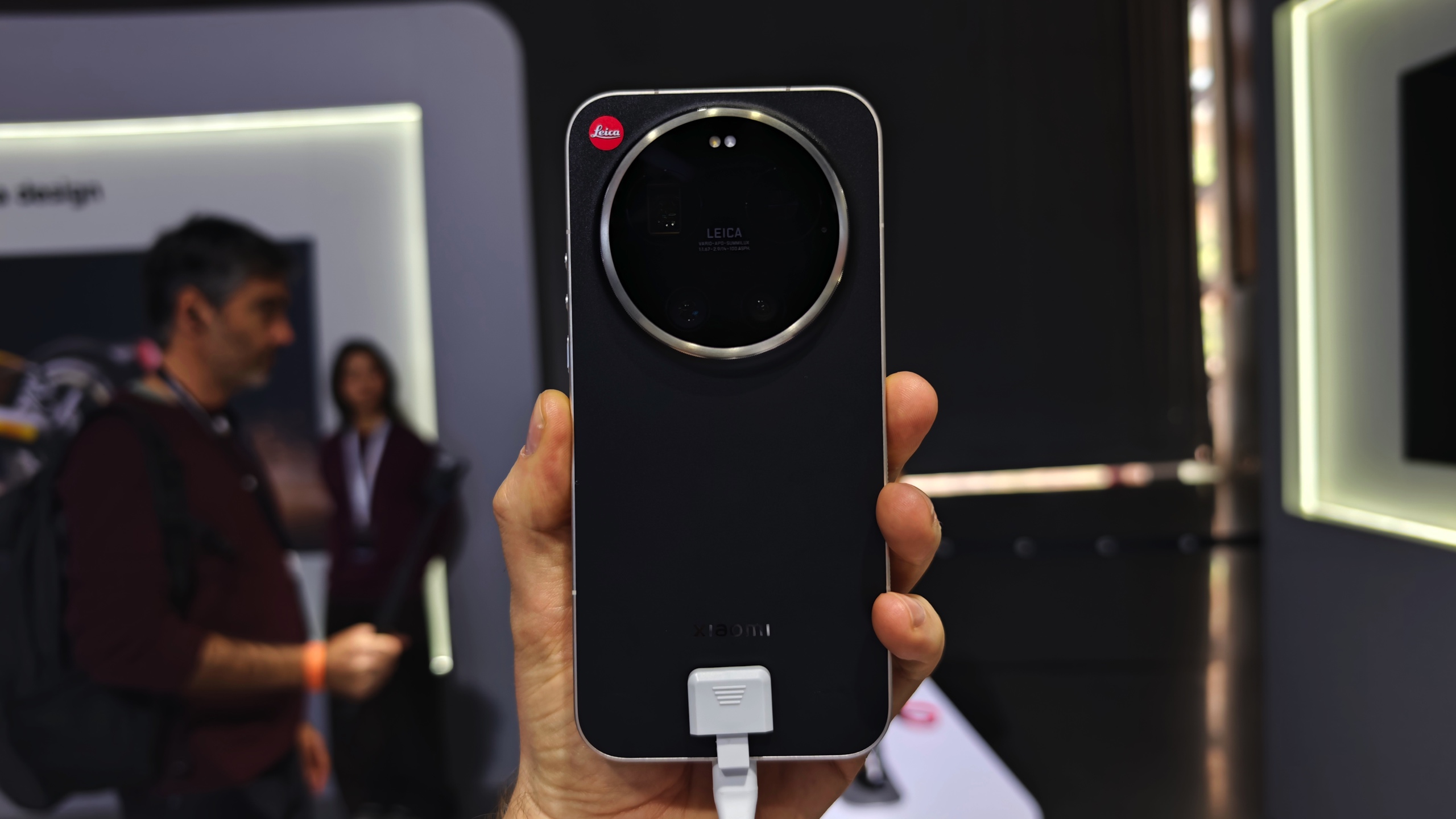
Leica also announced a new phone made in partnership with Xiaomi at MWC. It looks a whole lot like Xiaomi's 17 Ultra, but isn't the 17 Ultra, exactly.

Leica Leitzphone by Xiaomi hands-on at MWC 2026§
Leica Leitzphone by Xiaomi hands-on at MWC 2026
Image by Mat Smith for Engadget

Like the 17 Ultra, Leica's Leitzphone by Xiaomi has a 1-inch camera sensor and physical controls for zoom and other settings, using a mechanical ring around the camera unit. It features a Leica-designed intuitive camera interface with the option to show just the essentials when you're shooting, hiding all the modes and labels. There's a monochrome shooting mode and Leica filters. 

The Leica branding is splashed all over it in design and wallpapers, but it's otherwise pretty similar to the 17 Ultra, with the same specs. Like the 17 Ultra, it has a Snapdragon 8 Elite Gen 5 chip and a 6.9-inch 120Hz display. This one's priced at €1,999 (roughly $2,362).

Honor

Ahead of MWC, Honor announced what it claims is the thinnest Android tablet in the world: the 4.8mm thick MagicPad 4. We're expecting to hear more about this at Honor's press conference on Sunday, but so far we know it features a 12.3-inch 165Hz OLED display and weighs just 450g. It comes with up to 16GB of RAM and 512GB of storage, and is powered by Qualcomm's Snapdragon 8 Gen 5 chipset. The thinness doesn't count the camera bump, Honor notes. The MagicPad 4 has 13MP rear and 9MP front cameras. It also boasts spatial audio, with eight speakers.

Just as the display is slightly smaller than the previous MagicPad, the MagicPad 4 has a smaller battery at 10,100 mAh. It comes with a 66W fast charger. The MagicPad 4 will run Honor's MagicOS 10. We don't yet know how much it will cost, but we'll update this after Honor's press conference (where we're also expecting to see the company's robot) with any new details.  

We can always expect to see some wild phone concepts at MWC, and this year we're starting with one from Tecno. The company unveiled a modular concept smartphone design that can be as thin as 4.9mm in its base configuration. There’d be 10 modules to choose from based on the announcement, including various camera lenses, a gaming attachment and a power bank, relying on magnets to keep it all together — or Modular Magnetic Interconnection Technology, as Tecno is calling it. 

This article originally appeared on Engadget at https://ift.tt/dXO5vzr

from Engadget is a web magazine with obsessive daily coverage of everything new in gadgets and consumer electronics https://ift.tt/dXO5vzr

Xiaomi 17 Ultra hands-on: Incredible cameras, but maybe hard to get

China’s biggest phone makers continue to relentlessly forge ahead with high-spec phones that you may never see in the US. With the Xiaomi 17 Ultra this year, the company has continued its pattern from previous iterations by focusing on powerful camera sensors, huge batteries and… being selective about global availability.

Xiaomi’s 17 series is launching across multiple European territories months after its Asia debut, but at the time of writing, no word yet on US availability. Another logistical point of interest? When we last checked out Xiaomi’s devices, it was the 15 series, and the company has decided to skip 16 and leap straight to 17, conveniently matching Apple’s latest number.

Storied camera brand Leica has been involved with Xiaomi’s phones for a few years and its newest flagship doesn’t disappoint in that regard, because this is another Xiaomi device dedicated to photography.

Xiaomi 17 Ultra hands-on at MWC 2026
Image by Mat Smith for Engadget

The 17 Ultra has a huge 1-inch 50-megapixel main camera sensor with a f/1.67 lens, and a telephoto setup with a 200MP 1/1.4-inch sensor and going up to 4.3x optical zoom. Xiaomi claims it’s capable of up to 17x “optical-level zoom,” but quality doesn’t measure up to, say, the Oppo Find X9, with its dedicated telescopic lens add-on. There’s also a 50MP ultrawide camera to round things out.

The main camera is very impressive, delivering plenty of detail and performing incredibly well in low light, seemingly before any computational photography kicks in. A new Light Fusion 1050L sensor features LOFIC HDR technology, delivering stronger control over highlights and more detail in darker areas of your shots. I've been impressed by the balanced color tone and contrast, without having to edit or add one of the (many) Leica camera filters.

If anything, the slightly heavy-handed algorithms can sometimes ruin parts of a shot. For instance, by scrambling lettering or capturing blurry, AI-mutated faces where computational photography takes a swing (and a miss) at people in the distance.

Xiaomi 17 Ultra hands-on photo samples
Mat Smith for Engadget

The telephoto camera alone is also technically interesting in a few ways. It offers continual optical zoom across the 75-100mm range without in-sensor cropping. This means the lenses physically move to deliver lossless zoom across a range of distances, without jarring leaps between camera sensors and crops. This doesn’t run across the full gamut, but it does roughly cover the 3-4x optical zoom range, which is often used in portrait photography.

The APO (apochromatic) lens design on the telephoto is more immediately useful and effective. An APO lens significantly reduces chromatic aberration by focusing three wavelengths of light (red, green and blue) onto the same focal plane. This lens design means it can correct color fringing and improve image sharpness.

Xiaomi 17 Ultra hands-on photo samples
At full optical zoom, this light fitting at Soho Theatre Walthamstow doesn't bloom or fringe to the extent that most smartphone zooms suffer from.
Mat Smith for Engadget

At higher zoom levels, fringing and lighting bloom often hamper telephoto photos on smartphones, and Xiaomi’s solution has some appeal. I noticed less fringing than on other zoom-capable Android phones from Samsung, Oppo and Google. It also supports macro photography, but is hindered this time by a minimum focal distance of 30cm (11.8 inches). Most smartphone cameras’ macro modes let you get much closer.

The 17 Ultra can capture up to 8K video (at 30 fps), 4K Dolby Vision up to 120 fps, and 4K 120 fps Log video, ensuring you can make the most of that huge 1-inch sensor in video, too. That said, it seems to struggle with stabilization at times, while its low-light performance doesn’t match its prowess in still photography, lagging behind flagship phones from Apple, Google and Samsung.

There's also a special Leica edition of the 17 Ultra, which is largely the same, specification-wise, but with a manual zoom ring around the camera unit. It's a cool gimmick, but felt oddly loose on a few devices I've handled. 

Xiaomi made a few design changes to its Ultra line this year, with a new, entirely flat display, and flattened edges that look like a certain family of devices. In fairness, it’s not the only company using imitation as flattery. There’s also IP68 protection against dust and water.

While cameras may be the highlight, this is a flagship device by any specification metric. With a 6.9-inch display, this expansive OLED display has variable refresh rates (1-120Hz) and peaks at 3,500 nits of brightness.

At that size, the Xiaomi 17 Ultra is in the territory of devices like the iPhone 17 Pro Max and S26 Ultra. A phone this size isn’t for everyone, but it is the thinnest Ultra phone from Xiaomi to date, with a profile measuring 8.29mm. Xiaomi has also reduced the camera unit’s diameter and raised it on the device, making it easier to use and helping keep fingers out of your shots.

Xiaomi 17 Ultra hands-on at MWC 2026
Image by Mat Smith for Engadget

Also, I’d be remiss if I didn’t mention the huge 6,000mAh silicon-carbon battery, with support for Xiaomi’s 90W HyperCharge (if you have the right charger) and 50W wireless HyperCharge (which also requires Xiaomi’s own dock) speeds. Other phone makers: Please put a battery this huge in your flagship.

At MWC 2026, the company announced the global launch and rollout of the device across Europe, including the UK where the Ultra will start priced at £1,299 (roughly $1,750). We're still waiting to confirm US availability and pricing.

While the specs are powerful, “launching” a flagship device that’s already been in the wild for a few months — even if elsewhere in the world — reduces the spectacle.

This article originally appeared on Engadget at https://ift.tt/2sjA7eY

from Engadget is a web magazine with obsessive daily coverage of everything new in gadgets and consumer electronics https://ift.tt/2sjA7eY

Leica’s Leitzphone by Xiaomi has a huge 1-inch camera sensor and a stylish new design

Alongside a global launch for Xiaomi's 17 Ultra (read about that right here), the company announced a further deepening of its relationship with Leica. The CEO of Leica, Mattias Harsch, took to the stage to announce a new Leitzphone, which appears to be an even deeper collaboration than 17 Ultra by Leica, which is a different phone. Confused? That's fair. 

Design-wise, Leica has shifted back to a single tone body color, which looks more "Leica" to this camera dilettante's eyes. And if you’re thinking you’ve heard of the Leitzphone before, you probably have: it was a series of phones made by Sharp that launched in Japan in 2021. They all had a 1-inch camera sensor and yes, as does Xiaomi’s first Leitzphone. It also gets a customizable ring to control camera settings.

The interface is also designed by Leica. with the aim of being as intuitive as possible.

Leica Leitzphone
Image by Mat Smith for Engadget

The regular Xiaomi 17 Ultra and Leica edition have a Snapdragon 8 Elite Gen 5 chip and a 6.9-inch 120Hz display that can reach up to 3,500 nits of peak brightness. While cameras are the focus, it’s a flagship device by pretty much any metric — and the Leitzphone seems to have a very similar specsheet. We’ll be taking a closer look at what’s different when we get to test it out very soon.

After years of collaborating (and cute little badges), this may be the first pure "Leica phone", manufactured by Xiaomi, but sold directly by both companies. It's priced at €1,999 (roughly $2,362), but it's not known yet whether this phone will launch in the US. 

This is a developing story...

This article originally appeared on Engadget at https://ift.tt/14N3WPF

from Engadget is a web magazine with obsessive daily coverage of everything new in gadgets and consumer electronics https://ift.tt/14N3WPF

Steam Next Fest, a different flavor of The Witcher and other new indie games worth checking out

Welcome to our latest roundup of what's going on in the indie game space. It's Steam Next Fest week, with literally thousands of demos for upcoming games for us to dive into. I'm trying to check out as many as I can before the event wraps up on Monday. However, I made a near-critical error in my planning: I opted to try the Raccoin demo first. I could and would have happily played that all week.

This is a coin-pushing roguelike deckbuilder that adopts the format of Balatro. To progress, you need to earn a certain number of points and the target increases each round. Every three rounds there's a sort-of boss — a few coins that negatively impact your game until you can get rid of them. After every round, you’ll go to a shop to buy and sell special coins and other upgrades. As you might expect with this type of game, finding ways to boost the points you can score from each coin is how to win.

On my first successful run, I found a way to electrify the coins (which boosts their score) by charging them and use passive abilities and special coins to spread and amplify the effect. Then I was able to replicate a special coin that pulls all other nearby coins into a cyclone — having the water-based coins in there helped to spread the electrical effect between other coins. There were a few rounds in which I didn't even have to do anything. The cyclones just dumped enough coins over the edge for me. 

This was only the first way I've figured out how to break the game. Six hours in, I'm eager to find many more.

Raccoin — from Doraccoon and Balatro publisher Playstack — will hit Steam on March 31. The demo is currently still available.

I've had The Eternal Life of Goldman on my wishlist since we first learned about it a couple of years ago. I'm very glad that was one of the demos I've tried. This is an utterly gorgeous platform adventure with hand-drawn art. As Goldman, an elderly gentleman, you'll swap parts of your cane on the fly so you can hook onto floating rings or pogo off springs. 

The platforming is challenging enough that I had to focus to get through the demo, which lasts about 75-90 minutes. There's almost always something going on in the background or foreground too. This game from Weappy Studio is shaping up to be quite something. I can't wait to play the full thing when The Eternal Life of Goldman hits PC, Nintendo Switch, PS5 and Xbox Series X/S, hopefully later this year.

Of course I had to check out the Next Fest demo for Vampire Crawlers, which is also available on Xbox. The latest game from Poncle is a turn-based deckbuilder roguelite. Oh, and it's also a Vampire Survivors spin-off. Instead of passively firing your weapons at surrounding enemies, you have a bit more control here. 

It plays a bit like those first-person maze games from the '90s. You'll walk around each level with the help of a map that shows where enemies, chests and bosses are located. When you encounter enemies, you'll play cards in a certain order to deal damage or boost your stats for that particular battle. You can play all your available cards in one go, but you might want to rearrange them first so that you, for instance, use a card that boosts your damage before firing any weapons. Each card has a mana point value — you can only play a full hand if you have enough mana. And yes, there are weapon evolutions.

Turn-based games usually aren't my bag, but sometimes they just hit right. The Vampire Crawlers demo hits right. I can already tell I'm going to spend dozens of hours with the full game, which is coming to Steam, Xbox Series X/S, PS5, Nintendo Switch, iOS and Android this year. 

I tried a few other demos so far, including one for John Carpenter's Toxic Commando, a co-op shooter in the vein of Left 4 Dead. It's a little rough around the edges right now, but it seems enjoyable enough. 

There are a bunch of other Next Fest demos I'm hoping to try over the weekend, including precision platformer Croak, PvE pirate game Windrose, cyberpunk platformer Replaced, record store sim Wax Heads, match-three/tower-defense game Titanium Court and Dragon Care Tarot. I read that you can pet dragons in the latter, so I'm sold.

If you can't get enough of The Witcher and are impatiently waiting for CD Projekt Red to unleash The Witcher IV, here's one way to keep your thumbs busy in the meantime. Reigns: The Witcher is the latest installment of the Reigns series from Nerial and Devolver Digital for Steam, Android and iOS ($6). 

You still play as Geralt of Rivia. However, this is a narrative-focused game in which you make choices by swiping. It's something a little different for Witcher fans. It might just pull some long-time Reigns players into that fantasy universe for the first time too.

Bread and Fred is the cutest thing. The co-op platformer from SandCastles Studio has been available on PC (Steam, GOG and Epic Games Store) and Nintendo Switch for a while, and this week it landed on Xbox One, Xbox Series X/S, PS4 and PS5. It normally costs $15 and there's a 20 percent launch discount on those consoles. You'll need to be a PS Plus subscriber to get those savings on PlayStation, though.

You and a friend take control of a pair of adorable penguins that are tethered together. The aim is to ascend a mountain, sometimes by swinging each other to get to hard-to-reach places. But if you miss a jump, you can plummet back down and erase a chunk of your progress. There is a single-player mode in which one of the penguins is replaced by a rock. The pixel art aesthetic here is super charming.

Here's another co-op game. This one is a side‑scrolling RPG brawler. After several months in early access/game preview, the full version of Stoic's Towerborne arrived on Xbox Series X/S, Xbox on PC, Steam and PS5. It costs $25, though there's a 20 percent launch discount on Xbox. It’s on Game Pass Ultimate and Premium as well. 

After the 1.0 update, the game has a full campaign that you can play offline by yourself or online with friends. Stoic has added fresh biomes, enemies and bosses, and there are said to be hundreds of missions, side quests and bounties. I really dig the fluidity of the animations in the trailer, though the action is a bit hard to parse at first glance. Still, I'm curious enough to try out Towerborne.

I’ve been a little too occupied with other Next Fest demos (plus Overwatch challenges, I’ll admit it) to play Dice A Million yet, but this roguelike deckbuilder looks pretty interesting. The aim is to find the right combination of dice and rings (i.e. passive abilities) to roll a million points in one go. As with the likes of Balatro, it's all about figuring out powerful synergies between dice and rings to break the game and rack up ridiculous scores. I did quite enjoy a line on the Steam page that reads, "Cutting edge next-gen graphics (not really, I drew all of them on paint)."

Dice A Million — from Countlessnights and publisher 2 Left Thumbs — is also available on Itch and Xbox on PC. It's on Game Pass Ultimate and PC Game Pass. Otherwise, it costs $13, but there's a 20 percent discount on Steam until March 11. There's a demo available on Steam too.

Let's start this section with a news roundup. Mouse: P.I. for Hire continues to look rad, but unfortunately we'll have to wait a little longer to play it. Fumi Games and publisher PlaySide have delayed it by a few weeks until April 16 to polish the game up.

I do love voxel-based heist game Teardown, so I'm jazzed for the online multiplayer update. Tuxedo Labs revealed it will go live on Steam on March 12.

It will add a co-op campaign option (for up to 12 players!). There'll be hundreds of other multiplayer modes created by the studio and the community, including prop hunt, battle royale and floor-is-lava modes. There's going to be so much carnage. The PS5 and Xbox Series X/S versions of Teardown will get the multiplayer update later this year.

ConcernedApe (aka Eric Barrone) marked the 10-year anniversary of Stardew Valley by showing off some very early gameplay footage, some stories from his time of working on his all-time-great indie game and revealing the two additional characters that players will be able to marry when the 1.7 update goes live. Sandy's cool, so it'll be nice to have her as an option, but Clint? That guy sucks. Here's hoping Barrone will finally focus more of his attention on Haunted Chocolatier once this Stardew update is done and dusted.

Also as part of the 10th anniversary celebrations, it was revealed this week that an orchestra will deliver a one-night-only performance of music from Stardew Valley at the Red Rocks Amphitheatre in Colorado on October 25. I missed my chance to see the Symphony of Seasons tour in person when it stopped near me, because I don't always make the wisest decisions in life. At least we can now watch an official recording of a previous concert.

Minimap, a social platform for gamers, ran its first indie game showcase this week. Among the highlights:

  • Thrifty Business (Spellgarden Games), a cozy thrift-store management sim that's coming to Steam this year. A demo's available now.

  • Another look at Please, Watch The Artwork, an anomaly-spotting game — without jump scares or monsters — from Please, Touch The Artwork developer Thomas Waterzooi.

  • Lily’s World XD, a psychological horror game from SonderingEmily in which you'll investigate a teenage girl's laptop in the early 2000s. The trailer brings to mind screenlife films like Searching and Unfriended.

  • Coming-of-age adventure Ikuma - The Frozen Compass from Mooneye Studios. You'll play as both cabin boy Sam and husky Ellie (or have a friend take control of one of them) as you try to make your way home from the Arctic. This should hit Steam later this year. 

Tombwater was originally supposed to arrive in November, but Moth Atlas and publisher Midwest Games delayed it for further refinement. It's now set to arrive on Steam on March 31.A Next Fest demo is available now.

This is a 2D Soulslike with a Western setting and 2D pixel art that's inspired by Bloodborne and early Legend of Zelda games. You'll face off against horrific eldritch creatures as you search for a missing friend. You'll have seven playable classes to choose from and the ability to wield more than 50 firearms and melee weapons, and more than 20 spells. Tombwater is said to have around 20 hours of gameplay.

There's no release date for Solarpunk as yet, but I found this trailer quite soothing. It offers a first look at co-op gameplay for this base-building and exploration game from the two-person team at Cyberwave and publisher rokaplay. 

Up to four players will be able to explore floating islands, gather resources and build out a homestead together. As the title suggests, there's a technology-driven element to Solarpunk. You can use renewable energy sources to power tools that can automate things like resource harvesting and watering plants. The airships you use to travel between islands look cool too.

Solarpunk is set to hit Steam later this year. A demo is available now.

This article originally appeared on Engadget at https://ift.tt/Y1LUPcI

from Engadget is a web magazine with obsessive daily coverage of everything new in gadgets and consumer electronics https://ift.tt/Y1LUPcI

Friday, 27 February 2026

OpenAI will notify authorities of credible threats after Canada mass shooter's second account was discovered

OpenAI has vowed to strengthen its safety protocols and to notify law enforcement of credible threats sooner in a letter addressed to Canadian authorities, according to Politico and The Washington Post. If you’ll recall, Canadian politicians summoned the company’s leaders after reports came out that it didn’t notify authorities when it banned the account owned by the Tumbler Ridge, British Columbia mass shooting suspect back in 2025. Some of OpenAI’s leaders have already met with Candian officials, and British Columbia Premier David Eby said Sam Altman had also agreed to meet with him.

While OpenAI has yet to announce changes to its rules, Ann O’Leary, its vice president of global policy, reportedly wrote in the letter that the company will tweak its detection systems so that they can better prevent banned users from coming back to the platform. Apparently, after OpenAI banned the shooter’s original account due to “potential warnings of committing real-world violence,” the perpetrator was able to create another account. The company only discovered the second account after the shooter’s name was released, and it has since notified authorities.

Further, OpenAI will now notify authorities if it detects “imminent and credible” threats in ChatGPT conversations, even if the user doesn’t reveal “a target, means, and timing of planned violence.” O’Leary explained that if the new rules had been in effect when the shooter’s account was banned in 2025, the company would have notified the police. OpenAI will also establish a point of contact for Canadian law enforcement so it can quickly share information with authorities when needed.

The Canadian government sees OpenAI’s decision not to report the shooter’s original account as a failure. It threatened to regulate AI chatbots in the country if their creators cannot show that they have proper safeguards to protect its users. It’s unclear at the moment if OpenAI also plans to roll out the same changes in the US and elsewhere in the world.

This article originally appeared on Engadget at https://ift.tt/H3OFfnw

from Engadget is a web magazine with obsessive daily coverage of everything new in gadgets and consumer electronics https://ift.tt/H3OFfnw

Google Maps will finally be usable in South Korea

Google will finally be able to provide real-time driving and walking directions in South Korea, The New York Times reported. The company has received permission from the nation's Transport Ministry to export geographic data out of the country, which will allow it to provide GPS services as well as detailed listings for restaurants and other businesses. 

"We welcome today’s decision and look forward to our ongoing collaboration with local officials to bring a fully functioning Google Maps to Korea," Google's senior executive Cris Turner told the NYT in a statement. However, the approval is contingent “on the condition that strict security requirements are met,” a spokesperson from the Transport Ministry said. Those conditions reportedly restrict Google from displaying sensitive military sites and longitude and latitude coordinates. 

South Korea has generally restricted the export of 1/5000 scale map data over national security concerns, as it's still technically at war with its neighbor North Korea. Google hasn't been able to provide mapping directions or business details since it arrived in the nation, though it has applied twice in 2007 and 2016.

This lack of data sharing has reportedly been a bone of contention in trade talks with the US. Google argued that it was unfairly handicapped by the restrictions that allowed local apps like Naver to thrive. 

However, critics in the nation have expressed concern that Google could now come in and monopolize the market. "If Naver and Kakao are weakened or pushed out and Google later raises prices, that becomes a monopoly. Then, even companies that rely on map services — logistics firms, for example — become dependent [on Google]," geography professor Choi Jin-mu told Reuters

This article originally appeared on Engadget at https://ift.tt/g9F0XYT

from Engadget is a web magazine with obsessive daily coverage of everything new in gadgets and consumer electronics https://ift.tt/g9F0XYT

Thursday, 26 February 2026

Santander pins €1bn business value gain on AI

Bank said artificial intelligence will be fully embedded into the business, personalising customer experiences

from ComputerWeekly.com https://ift.tt/fOyda5s

US artificial intelligence developers accuse Chinese firms of stealing their data

Artificial intelligence developers are accusing Chinese firms of stealing their intellectual property following a spate of ‘distillation attacks’, despite their own alleged theft of training data

from ComputerWeekly.com https://ift.tt/1AtgOSG

Wednesday, 25 February 2026

Honor says its 4.8mm thick MagicPad 4 is the world's slimmest Android tablet

Ahead of a full release at Mobile World Conference (MWC), Honor has teased the MagicPad 4 that it calls the world's thinnest Android tablet. The new model is just 4.8mm thick (not counting that camera bump), a full millimeter thinner than the MagicPad 3 and slightly less than the 5.1mm iPad Pro and Samsung Galaxy Tab S11, the company revealed.

On top of being thinner, the MagicPad 4 has a new 12.3-inch 165Hz OLED display. While slightly smaller than before, it should be considerably better than the LCD display on the previous model. The new model weighs 145 grams less than before at 450g thanks to that screen and the slightly smaller 10,100 mAh battery (with a 66W fast charger in the box). 

The new tablet is powered by Qualcomm's Snapdragon 8 Gen 5 chipset and comes with up to 16GB of RAM and 512GB of storage. It's equipped with 13MP rear and 9MP front cameras, along with eight speakers for spatial audio. The MagicPad 4 will run MagicOS 10, Honor's flavor of Android 16. There's no word on pricing or availability yet, but we'll likely learn more at the company's press conference on Sunday — along with the company's weird robot revealed yesterday. 

This article originally appeared on Engadget at https://ift.tt/GLAkFuc

from Engadget is a web magazine with obsessive daily coverage of everything new in gadgets and consumer electronics https://ift.tt/GLAkFuc

Institutionalised AI puts Visa top of ranking

The payment card services giant leads the way in applying artificial intelligence in its sector, according to research

from ComputerWeekly.com https://ift.tt/hYPva24

xAI's trade secret lawsuit against OpenAI has been dismissed

OpenAI has successfully convinced the court to dismiss the lawsuit filed by Elon Musk’s xAI, accusing the company of stealing its trade secrets. In her decision, US District Judge Rita F. Lin wrote that xAI’s complaint “does not point to any misconduct by OpenAI” and instead attributes all listed misconducts to its eight former employees who “ left for OpenAI at around the same time.”

Lin said that xAI accused two of its former employees of stealing its source code before leaving at a time when they were already speaking to an OpenAI recruiter. However, the company didn’t say if the recruiter told those former employees to do so. xAI’s lawsuit also accuses two other former employees of keeping their work chats on their devices even after leaving, another of refusing to provide certifications related to confidential information after his departure, and another of unsuccessfully trying to access xAI hiring and datacenter optimization information when he was already working for OpenAI.

“Notably absent are allegations about the conduct of OpenAI itself,” the judge noted. xAI didn’t include any information that directly accuses OpenAI of making those employees steal its trade secrets. It also didn’t include allegations that those former employees used any stolen trade secrets after they were already working for OpenAI. To be precise, OpenAI’s motion for dismissal was granted with leave to amend, so the lawsuit may not be completely over just yet. That means xAI can still file an amended complaint addressing what the judge wrote in her decision until March 17, 2026.

OpenAI and xAI have a longstanding feud, and this is just one of the several lawsuits between the two companies. In fact, Musk has an ongoing complaint against OpenAI and Microsoft, accusing the former of violating its nonprofit status. Musk, who was an early funder of OpenAI, is now asking the company for $79 billion to $134 billion in damages from “wrongful gains.”

This article originally appeared on Engadget at https://ift.tt/JBoinM9

from Engadget is a web magazine with obsessive daily coverage of everything new in gadgets and consumer electronics https://ift.tt/JBoinM9

Tuesday, 24 February 2026

Retirement plans postponed as tech issues delay pension payments

In this week’s Computer Weekly ezine, we dig into the tech issues affecting the Civil Service Pension Scheme, which have left some members in severe financial difficulties. We also sit down with Segro CIO Richard Corbridge to find out how he is bringing to bear his experience of working in both the private and public sector to make digital transformation happen at the property management company. The buyer’s guide this week starts a series of articles about neocloud providers, and how the rising demand for artificial intelligence and sovereign capabilities are reshaping the cloud computing market. And, rounding out the issue, we have a feature looking at the work that is going into creating a viable quantum internet. Read the issue now.

from ComputerWeekly.com https://ift.tt/bYmgt0v

Tesla sues California DMV after it banned the term 'Autopilot'

Tesla is suing California's Department of Motor Vehicles (DMV) to reverse a ruling that prevented the automaker from using the terms "Autopilot" and "Full Self-Driving" to sell cars, CNBC reported. That follows a December ruling by a California administrative law judge that forced Tesla to clean up its marketing language or risk a suspension of its sales license. Last week, the DMV determined that Tesla had made the necessary changes, including changing the name to "Full Self-Driving (Supervised)," and that no suspension would occur.

However, if you had "Tesla is going to sue them back" in your office pool, you can go ahead and claim your prize. The company filed a complaint on February 13 alleging that the DMV "wrongfully and baselessly" called Tesla a false advertiser. Calling the order "factually wrong" and "unconstitutional," Tesla demanded that order be set aside.

The DMV had originally argued that Tesla's terms for its driver assistance program gave consumers the impression that its cars were safe to drive without a human at the wheel. However, Tesla said that the DMV never proved that buyers were confused and that it was "impossible" to buy a Tesla without seeing "clear and repeated statements" that its systems aren't fully autonomous. 

Tesla's appeal of the ruling isn't a shocker given that the company is essentially betting its future on autonomous vehicles. CEO Elon Musk has long promised buyers that its vehicles would eventually become fully autonomous and that you'd even be able to rent them out to provide robo-taxi services. "If you fast forward a year, maybe [15 months], we'll have over a million robo-taxis on the road," he wrongly predicted back in 2019.

Following a sales decline last year that was particularly steep in Europe, Tesla is banking on its Cybercab two-seater to boost its fortunes. The company has started limited testing of automated vehicles as part of its Robotaxi pilot in Austin, Texas. 

Last week, however, Tesla lost an appeal in a $243 million lawsuit verdict over a 2019 crash of a Model S — largely over its use of the terms "Autopilot" and "Full Self-Driving." Last month, the company canceled Autopilot, its basic of advanced driver assistance tier, on new Model 3 and Model Y vehicles and switched its FSD (Supervised) tier to subscription-only.  

This article originally appeared on Engadget at https://ift.tt/4DwEd8F

from Engadget is a web magazine with obsessive daily coverage of everything new in gadgets and consumer electronics https://ift.tt/4DwEd8F

Monday, 23 February 2026

Pure Storage rebrands to Everpure as storage maker’s business expands focus to data management

Everpure rebrand aims to put the focus on managing data throughout its lifecycle for optimum use, storage, security and sovereignty, with new functionality planned this year

from ComputerWeekly.com https://ift.tt/rzGgLAk

€126bn in Dutch tech projects blocked by permits and grid limits

Ex-ASML chief Peter Wennink’s deregulation solution triggers warnings from academics and government advisors

from ComputerWeekly.com https://ift.tt/jzoCKYG

Sunday, 22 February 2026

Apple is reportedly considering red as the next premium color for its iPhones

First, we got iPhones in Hermès orange, and now we might get them in Louboutin red. According to Bloomberg's Mark Gurman, Apple is already mulling over what the next premium colorway will be for its iPhone Pro models. While we're not expecting iPhone 18 announcements until later this year, Gurman reported that "red is the new flagship color in testing for the next iPhone Pros."

Gurman added that there were rumors of purple and brown shades, but predicted that these could just be different shades of the main red option. Red is definitely a departure from Apple's usual palette of more modest tones, but the company could be trying to continue the momentum of its flashier Cosmic Orange option that has been boosting sales in China. The bold orange option has been informally rebranded as Hermès orange among fans and is becoming somewhat of a status symbol in Chinese markets. With red as a potential frontrunner for the next iPhone Pro colors, Apple could capture even more sales in China, especially since the color is seen as lucky in Chinese culture.

It's not the first time Apple has offered red iPhones, though. Previously, Apple manufactured iPhones in deep red hues in collaboration with Product Red, with the last available models being the iPhone SE, iPhone 14 and iPhone 14 Plus. On the other hand, Gurman reported that Apple will play it much safer when it comes to the rumored foldable iPhone, sticking with its basic tones.

This article originally appeared on Engadget at https://ift.tt/sCibTa7

from Engadget is a web magazine with obsessive daily coverage of everything new in gadgets and consumer electronics https://ift.tt/sCibTa7

Apple's first event of the year will reportedly bring at least five products over a 'three-day blitz'

Ready your wallets if you've been thinking about upgrading your Apple products. According to Bloomberg's Mark Gurman, Apple will announce "at least five products," starting on Monday, March 2, and extending to its scheduled "experience" on Wednesday, March 4.

There's a long list of potential options that Apple could announce next month, but Gurman is confident in a few. According to the report, Apple is "very likely" to reveal the low-cost MacBook, especially considering the event logo's choice of colors that could reference the new laptop colors. Gurman also predicted that Apple could announce the iPhone 17e, since its predecessor was launched last spring, and an iPad Air that's updated with the M4 chip. Previous rumors point to Apple getting ready to drop the upgraded MacBook Pro, which will likely get M5 Pro and Max chips, and the new MacBook Air with the base M5 chip. If that wasn't enough, Apple could even debut the refreshed Mac Studio and a new Apple Studio Display since the two desktop-oriented options were already expected to be released in the first half of the year.

There hasn't been any confirmation from Apple directly, but it may have left behind some hints for this "three-day blitz" of product announcements. Going off Apple's wording, the March 4 event will be an "Apple Experience" with locations in New York, London and Shanghai, which doesn't sound like the typical format of an event with keynote addresses that's paired with a livestream. Gurman also noted that Apple usually announces its new products on Tuesday, unlike the official Wednesday timing.

This article originally appeared on Engadget at https://ift.tt/J5G4vX9

from Engadget is a web magazine with obsessive daily coverage of everything new in gadgets and consumer electronics https://ift.tt/J5G4vX9

How to send a message via satellite on iPhone

Apple’s satellite features were originally designed for emergencies, allowing iPhone users to contact emergency services when cellular and Wi-Fi coverage is unavailable. With recent versions of iOS, Apple has expanded those capabilities to include sending and receiving messages via satellite. This makes it possible to stay in touch with friends and family from remote locations where traditional networks do not reach, such as hiking trails, rural areas or offshore locations.

Messaging via satellite is built directly into the iPhone and works automatically when no cellular or Wi-Fi signal is available. While it is not intended to replace regular messaging, it can be a useful backup when coverage drops.

Before you can get started, you’ll need to turn on iMessage before you’re off the grid. It’s also important to set up an emergency contact as well as members of your Family Sharing group prior to your departure. This will enable them to message you via SMS without the need to message them first.     To send a message via satellite, open the Messages app when no cellular or Wi-Fi signal is available. If the feature is supported in the current location, the app will display a prompt indicating that satellite messaging is available.

Selecting the option to connect via satellite launches a guided connection screen. Your iPhone will provide real-time instructions to help maintain alignment with the satellite. Once connected, a text message can be typed and sent, although delivery may take longer than usual.

The iPhone will notify you when the message has been sent successfully. Replies from the recipient will also be delivered via satellite, as long as the connection remains active.

Sending messages via satellite requires a compatible iPhone model and the correct software version. The feature is supported on iPhone models with satellite hardware, beginning with iPhone 14 and later. The device must be running a version of iOS (iOS 18 or higher) that supports satellite messaging, which Apple has continued to refine through recent iOS updates.

The feature also depends on location and availability. Satellite messaging is currently supported in select regions, including the United States and parts of Canada, with expanded support rolling out gradually. The iPhone must be outdoors with a clear view of the sky, as trees, buildings and terrain can interfere with the satellite connection.

Satellite messaging is not designed for continuous conversations. Messages are compressed and sent at a slower pace than standard texts, and delivery times can vary depending on conditions and satellite positioning.

When an iPhone loses access to cellular and Wi-Fi networks, the system automatically detects that only satellite connectivity is available. Instead of failing to send, the Messages app prompts the user to connect to a satellite.

On-screen instructions guide the user to position the phone correctly. This typically involves holding the device up and following directional prompts to align it with an overhead satellite. The phone uses built-in sensors to help maintain the connection while the message is being sent.

Messages sent via satellite are text-only and use a reduced data format to ensure they can be transmitted reliably. Images, videos, audio messages and large attachments are not supported.

Satellite messages can be sent to contacts using iMessage or standard SMS, depending on the recipient’s device and settings. If the recipient is using an Apple device with iMessage enabled, the message will be delivered through Apple’s messaging system. If not, the message will be sent as a standard text.

Recipients do not need a satellite-capable device to receive messages. From their perspective, the message appears similar to a regular text, though delivery times may be longer.

A clear view of the sky is essential for satellite messaging to work properly. Open areas with minimal obstructions offer the best results. Movement, heavy foliage and nearby structures can interrupt the connection.

Because satellite bandwidth is limited, keeping messages short improves reliability and delivery speed. The iPhone may prompt the user to edit longer messages to fit within satellite constraints.

Battery life is also a consideration. Maintaining a satellite connection uses more power than standard messaging, so it helps to conserve battery when relying on satellite features for extended periods.

Satellite messaging is designed for occasional use when other networks are unavailable. It does not support group messages, media attachments or read receipts in the same way as standard messaging.

Delivery times can range from under a minute to several minutes, depending on environmental conditions and satellite availability. The feature should not be relied upon for time-sensitive communication unless no other option is available.

Apple has also noted that satellite features may be offered free for a limited period, with potential pricing or subscription requirements introduced in the future depending on region and carrier arrangements.

Messaging via satellite can be helpful for travelers, hikers and anyone spending time in remote areas where coverage is unreliable. It offers a way to check in, share basic updates or request non-emergency assistance when traditional networks are unavailable.

While it is not a replacement for emergency services, it complements Apple’s existing emergency satellite features by providing an additional communication option when users are off the grid.

As Apple continues to expand satellite support, messaging via satellite is likely to become a more familiar part of the iPhone experience, particularly for users who regularly venture beyond the reach of cellular networks.

This article originally appeared on Engadget at https://ift.tt/IPE49BF

from Engadget is a web magazine with obsessive daily coverage of everything new in gadgets and consumer electronics https://ift.tt/IPE49BF

Saturday, 21 February 2026

A judge ruled Tesla still has to pay $243 million for a fatal crash involving Autopilot

Tesla is still on the hook for $243 million after a US judge rejected the EV maker's bid to overturn a jury verdict from last year. On Friday, US District Judge Beth Bloom upheld the jury's decision to hold Tesla partially responsible for a deadly crash that happened in 2019 and involved the self-driving Autopilot feature.

The judge added that there was enough evidence to support the jury's verdict, which was delivered in August 2025 and ordered Tesla to pay millions in compensatory and punitive damages to the two victims in the case. Judge Bloom added that Tesla didn't present any new arguments to dispute the decision. 

While the case has been moving along recently, the incident dates back to several years ago when the driver of a Model S, George McGee, was using Tesla's Autopilot feature while bending down to retrieve a dropped phone. The Model S then crashed into an SUV that was parked on a shoulder, where Naibel Benavides Leon and Dillon Angulo were standing aside. Benavides was killed in the crash, while Angulo was severely injured.

Tesla hasn't publicly commented on Judge Bloom's decision yet, but it won't be a surprise to see the company appeal the latest ruling with a higher court. Tesla's lawyers previously tried to pin the blame on the driver, claiming that the Model S and Autopilot weren't defective. As this major case plays out, Tesla is also facing several investigations from the National Highway Traffic Safety Administration for both its Autopilot and Full-Self Driving features.

This article originally appeared on Engadget at https://ift.tt/5Vj23d9

from Engadget is a web magazine with obsessive daily coverage of everything new in gadgets and consumer electronics https://ift.tt/5Vj23d9

An old-school Zelda-like, Skate Bums and other new indie games worth checking out

Welcome to our latest roundup of what's going on in the indie game space. As a reminder, the latest edition of Steam Next Fest runs from February 23 until March 2, during which you'll be able to check out demos for hundreds of upcoming games. A bunch are available already, including one for Denshattack!, which I definitely recommend checking out. As it turns out, doing Tony Hawk Pro Skater-style tricks with a high-speed Japanese train absolutely rips.

On Thursday, there were four showcases highlighting indie games all in a single day. It's not exactly feasible for me to recap them in full here, unfortunately, but I can at least tell you about a few of the many highlights.

The Black History Month edition of the Black Voices in Gaming Showcase includes trailers and interviews for some games that are already available, such as Space Warlord Baby Trading Simulator, Aerial_Knight's DropShot and Relooted. Of course, the stream featured plenty of games that are on the way too.

Erased, from solo developer Jerron Jacques, looks pretty interesting. It's an open-world fighting game that takes place in a cyberpunk setting with dance battles, parkour, pets, strange creatures and much more. Jacques, who has been documenting the game's development process on social media, even carried out some of the parkour motion capture work personally.

There was lots of good stuff in this week's Convergence Showcase too, including another peek at Mouse: P.I. for Hire as we get to see one of the game's bosses for the first time. This first-person shooter with rubber-hose animation is set to arrive on March 19.

There were other welcome announcements for me in this showcase. First, there was a release date for the Zelda-inspired adventure Gecko Gods. I've had this on my wishlist since 2022, so I'm glad to learn it'll hit Nintendo Switch, PS5 and PC on April 16. 

In addition, record shop sim Wax Heads (which probably should have been called Low Fidelity, tbh) is coming to PC, Xbox Series X/S, PS5, and Nintendo Switch on May 5. You can check out a Steam Next Fest demo for that one now.

The second edition of Indie Fan Fest had a trove of goodies as well. For one thing, Balatro publisher Playstack could be about to cause another mass reduction in collective productivity with Raccoin, which now has a release date of March 31. This is another roguelike deckbuilder, but this time it's in the form of a coin pusher. I didn't have a chance to check out the previous playtest to get a better sense of why there's so much buzz around this one, but I'll for sure be trying the Steam Next Fest demo, which is available now.

It remains deeply weird to refer to a game under Acclaim's umbrella as an indie, but that's where we are now. The publisher is bringing Ridiculous Games' GridBeat to Nintendo Switch and Steam on March 26. This is a rhythm-based dungeon crawler in which you (a hacker) try to escape from a corporate network after pilfering valuable data. There's a Next Fest demo available for this one too. 

Meanwhile, a narrower release window for Japanese convenience store sim InKonbini: One Store. Many Stories was revealed. It's coming to Steam, PS5, Nintendo Switch and Xbox in April.

Alongside a related sale on Steam, the first Quebec Games Celebration Showcase took place on Thursday. It's always neat to learn about games being made in my neck of the woods.

One of those is Surfpunk, a co-op action RPG that looks a bit like Hades with surfing. Radical. You'll venture to procedurally generated islands in search of loot. There are four weapon classes to choose from and gadgets you can craft after collecting resources on your run. There's an updated Steam demo that's said to have around five hours of gameplay. Surfpunk (which is from Convergence: A League of Legends Story developer Double Stallion) will arrive later this year.

I'm including this demo announcement trailer for Croak, a precision platformer from Woodrunner Games that appears to be heavily inspired by the likes of Celeste, separately for one main reason. You have to check out the studio's head of "barketing." (Okay okay, the game's hand-drawn visuals look lovely too.)

There's plenty of other interesting stuff in the Quebec Games Celebration Showcase, including another look at Tears of Metal from Paper Cult Games, the studio behind the very enjoyable Bloodroots. There's a Steam demo available for the hack-and-slash roguelite, which should be out this spring. Gothic sci-fi Metroidvania Silent Planet looks quite tasty too.

Under The Island looks and sounds very The Legend of Zelda: A Link to the Past-coded. But since that's my favorite game of all time, I am not complaining. I love that protagonist Nia appears to use a hockey stick as a weapon too. 

This action PRG from Slime King Games (and co-publishers Top Hat Studios and Doyoyo Games) has debuted to strong early reviews. It's available now on Steam, Xbox One, Xbox Series X/S, PS4, PS5 and Nintendo Switch for $20, though there's a 15 percent launch sale (you'll need to be a PS Plus member to get the discount on PS4 and PS5).

Demon Tides — a 3D, open-world platformer from Bubsy 4D and Demon Turf developer Fabraz — has lots of movement mechanics, including paragliders and hookshots. You can shapeshift into different forms as well.

You can create and share graffiti, and this will appear in other players' games (which is a neat touch). Demon Tides is out now on Steam. It'll usually cost $25, but until March 5, you can snap it up for $20.

Skate Bums is a 2D skateboarding game in the tradition of the OlliOlli series. As novice skateboarder Lux, you'll try to take down the Skate Bums, a gang of bullies. There are "weird characters," sick combos to pull off, coins to collect and wrecking balls to dodge. 

There's said to be a "simple directional trick system" while each run is apparently short. That seems ideal for quick, pick-up-and-play sessions on Nintendo Switch and Switch 2. I also just really like the title. Skate Bums, which is from Lucky Last Studio, will normally cost $15 but there's a 15 percent discount until February 27.

Love Eternal is a psychological "horror platformer about escaping the domain of a selfish god," which is a strong pitch from developer brlka and Demonschool publisher Ysbryd Games. You'll need to flip between different gravitational pulls as you navigate this precision platformer, which follows teenager Maya on her attempt to return to her own reality. 

During a dinner at home, Maya's family disappears and she suddenly appears in an "eerie, desolate realm" that looks like an Iron Age castle. That's a creepy enough set up to match the game's haunting atmosphere. Love Eternal is out now on Steam, PS4, PS5, Xbox One, Xbox Series X/S and Nintendo Switch for $10. There's a 15 percent launch discount (again, you'll need to be a PS Plus member to take advantage of that on PlayStation).

Woe Industries, the developer of You Have Billions Invested In Generative AI (and a bunch of other neat projects), has something intriguing on deck for next week — a standardized gaming test. You can start the Adventure Game Aptitude Test (AGAT) at any time between 1PM and 2PM ET on February 28. 

You'll have four hours to complete an '80s adventure game of Woe Industries’ choosing. The developer will seemingly be monitoring your browser and smartphone activity to ensure you don't consult a walkthrough. If you're successful, you'll receive an AGAT certification and diploma. Good luck!

"Musical narrative adventure" People of Note is coming to Steam, Epic Games Store, the Xbox App on PC, Nintendo Switch 2, PS5 and Xbox Series X/S on April 7 for $25 (though there'll be a 10 percent launch discount). The game follows pop singer Cadence on her quest for stardom. Along the way, Cadence and her buds will have to overcome enemies in battles that have turn-based and rhythm-based elements.

I mostly enjoyed playing through a preview several months ago, though I had to grit my teeth through the turn-based combat, which is not something I enjoy as a rule. However, Iridium Studios will allow players to turn off elements like that and environmental puzzles so more people who might have otherwise been turned off can enjoy People of Note. You can sample the game now on Steam via a 90-minute Next Fest demo.

I don't fully understand what's going on in the reveal trailer for Titanium Court, which is from AP Thomson (a solo developer who previously worked on Consume Me) and publisher Fellow Traveller. Even the press release notes that it's "impossibly difficult to describe." But it has an absorbing trailer soundtracked by an odd, Bill Callahan-esque song and it has already picked up several IGF award nominations, so I'm intrigued.

What I am able to surmise is that it's a surrealist, roguelike strategy game with match-three, auto battle and tower defense elements. It's also for "clowns and criminals," apparently. I'm gonna have to give the Steam Next Fest demo a shot to try to get my head around it. Titanium Court is coming to Steam “imminently.”

Sometimes, a game pops up that makes me think "how has no one done this before?" Such is the case with Become. It's a third-person linear adventure from solo developer Valentin Wirth in which you take on the guise of a single sperm. You can probably guess what the goal is.

The game has "no explicit sexual acts, nudity or violence," according to its Steam page, though you will encounter some danger along your journey. You can upgrade your bespectacled spermatozoon via skill trees and seemingly adorn various pieces of headgear. Become is slated to hit Steam later this year.

This article originally appeared on Engadget at https://ift.tt/IzBitHm

from Engadget is a web magazine with obsessive daily coverage of everything new in gadgets and consumer electronics https://ift.tt/IzBitHm