Thursday, 30 September 2021
Stop being ‘apologetic’ for differing skillsets, says Most Influential Woman in UK Tech 2021
from ComputerWeekly.com https://ift.tt/3upfZeW
Computer Weekly announces the 2021 Most Influential Women in UK Tech
from ComputerWeekly.com https://ift.tt/3mcqHlb
Sony buys remake and remaster studio Bluepoint Games
Sony has acquired Bluepoint Games, the Austin-based studio best known for remaking Demon’s Souls and Shadow of the Colossus. Financial terms of the deal haven’t been disclosed. Rumors that Sony was buying Bluepoint started to spread online right around the time the company acquired Returnal developer Housemarque in late June. Sony didn’t say whether Bluepoint will continue to focus its efforts on remastering past titles or if it will work on an entirely new IP now that it’s part of the PlayStation Studios family.
Introducing the next member of the PlayStation Studios family… pic.twitter.com/mRDLD5KwDM
— PlayStation (@PlayStation) September 30, 2021
“PlayStation has such an iconic gaming catalog and for us there’s been nothing better than to bring some of gaming’s masterpieces to new players,” said Marco Thrush, the president of Bluepoint Games. “Becoming a part of PlayStation Studios empowers our team to raise the quality-bar even further and create even more impactful experiences for the PlayStation community.”
With the announcement of today’s deal, Sony has acquired three studios in the past year. That number increases to four over more than two years if you include its 2019 purchase of Spider-Man developer Insomniac Games. That’s a significant change of pace for a company that was previously much slower to buy up external developers to bolster its first-party lineup. But then a lot has changed in just the last year. Microsoft’s recent $7.5 billion deal to buy Bethesda parent company ZeniMax Media means many highly anticipated games like Starfield aren’t coming to PlayStation anymore. Sony needs the kind of talent that’s at Bluepoint to keep pace.
from Engadget is a web magazine with obsessive daily coverage of everything new in gadgets and consumer electronics https://ift.tt/3AZZ6K9
Google's original Nest Hub drops to $40 at Best Buy
If you've wanted to add to your Google Assistant home setup without spending too much money, Best Buy has a new way that you could do that. The retailer has the original Nest Hub smart display for $40, or $50 off its normal price. This gadget came out in 2018 and has since been replaced by the sleep-tracking, second-generation Nest Hub — but if you're willing to skip a few new features, you can get a largely similar device for one of the best prices we've seen.
Buy Nest Hub (1st-gen) at Best Buy - $40We gave the original Nest Hub, formerly known as the Google Home Hub, a score of 87 when it first came out for its lovely 7-inch display, charming minimalist design and extra privacy thanks to a lack of a camera. It makes a good smart alarm clock, even if it is slightly larger than something like the Echo Show 5, but it also won't look out of place on your kitchen countertop. It can even act as a digital photo frame if you use Google's Live Albums feature. Plus, you can control smart home devices from its touchscreen, and it'll show feeds from Nest security cameras so you can check in on any area of your home more easily.
So what will you miss out on if you opt for the previous-generation device instead of the new, $100 Nest Hub? It comes down to three main things: the Soli motion sensor, improved audio and a speedier Google Assistant. The Soli sensor enables gesture controls as well as sleep tracking, so you could position the new Nest Hub on your nightstand and it will track things like time asleep, sleep quality and snoring. We weren't super impressed by the device's nighttime tracking abilities, but we expect improvements to be made in future software updates.
As for sound and the Assistant, the new Nest Hub has the same audio system as the Nest Audio speaker, so it's a big improvement over the original. Plus, the onboard machine-learning chip allows the Assistant to respond more quickly to queries and commands. Overall, the latest Nest Hub is an improvement on the original, but the first-generation device remains a solid option if you're on a strict budget or if you feel you can safely skip the latest upgrades.
Follow @EngadgetDeals on Twitter for the latest tech deals and buying advice.
from Engadget is a web magazine with obsessive daily coverage of everything new in gadgets and consumer electronics https://ift.tt/3F9q0Sy
Spotify's quiz will help you find a new podcast based on your listening habits
In the last year alone, almost 1.5 million podcasts have been added to Spotify. Fishing out something good from that ocean of content might not be easy, but Spotify wants to help you find a keeper. To mark International Podcast Day, it created a quiz to help listeners discover a show that matches their taste.
Users in the US, UK, Germany and Australia can now check out the Find The One tool. It asks questions such how a podcast can win you over — perhaps you prefer a conversational show or a narrative-driven murder mystery one — and how serious you like things to be. Spotify will then make a recommendation that's partly based on your listening habits.
The company says it found correlations between some artists and podcasts. Lil Nas X, for instance, has a lot of gamer fans who also listen to the likes of the TommyInnit Podcast, while Olivia Rodrigo and Call Her Daddy have a shared audience. Spotify also discovered that many BTS and Queen fans listen to podcasts about... BTS and Queen.
from Engadget is a web magazine with obsessive daily coverage of everything new in gadgets and consumer electronics https://ift.tt/2Y6g4IP
Xbox Cloud Gaming goes live in Australia, Japan, Brazil and Mexico
In the same week it began public tests of Xbox Cloud Gaming on consoles, Microsoft is expanding the project formerly known as xCloud in other ways. Cloud Gaming is going live in Brazil and Mexico today, and in Australia and Japan on October 1st.
The company started testing xCloud in those four nations last November. It seems the preview proved popular, as players in Brazil packed out the Cloud Gaming servers even before Microsoft formally announced the test.
The expansion means that more than a billion people in 26 countries now have access to Xbox Cloud Gaming. All they need is a Game Pass Ultimate subscription, a compatible device (like a computer, smartphone or tablet) and a strong-enough internet connection. Folks don't necessarily need a controller, as there are a bunch of games that have touch controls.
Microsoft made the announcement at Tokyo Game Show, where it had some other news up its sleeve. Action JRPG Scarlet Nexus just landed on Game Pass, for one thing. You can play it on consoles, PC and Cloud Gaming with touch controls.
The company is also localizing Starfield and Redfall, two major upcoming first-party games, for Japan. The Starfield localization is the biggest translation project Bethesda has ever tackled, as it involves more than 300 actors and north of 150,000 lines of dialogue.
from Engadget is a web magazine with obsessive daily coverage of everything new in gadgets and consumer electronics https://ift.tt/39T3rDa
UK AI strategy focused on economic growth, resilience and ethics
from ComputerWeekly.com https://ift.tt/3F5wH7P
‘Lower Decks’ mines the weirder corners of the Star Trek universe
The following contains minor spoilers for season two, episode eight of 'Star Trek: Lower Decks.'
The subject of “canon” has come up a lot recently. Marvel’s What If…? is a show that plays around but still mostly adheres to it, while Star Wars Visions disregards it almost completely. Meanwhile, Star Trek: Lower Decks is a humorous show that wasn’t expected to follow canon and yet, the writers seem to have made it their mission to fill out the gaps in Star Trek continuity. And this might be the cartoon’s greatest strength.
CBS
The show’s willingness to reference past adventures is on full display this week, as the USS Cerritos is tasked with running drills to test crew efficiency. Seeing a Starfleet crew put through its paces is something we’ve seen many times before, though this time around it’s for a particularly non-Starfleet-like reason: Captain Freeman accidentally leaves our core four cast members behind when jetting off on a rescue mission. To be fair, the quartet of ensigns did forget to sign their magnet boots out, which would have let their senior officers know they weren’t on the ship. But still, it’s a screw-up we don’t often see on Star Trek.
In response, the entire crew is gathered in a cargo bay to be tested by a Pandronian instructor — a species never seen in any live-action Star Trek productions, but familiar to anyone who’s watched the 1973 animated series. Pandronians are colony creatures that can split into three pieces, something that was harder to create when special effects were far less sophisticated. Animation has fewer limitations, and Lower Decks has taken advantage of that plenty in its two seasons to showcase species like the Caitians, Ariolo and Kzinti.
CBS
Though it utilized many of the cast and crew of the original series, the canonized status of the animated Star Trek was always a nebulous thing, with some writers saying that episodes like “Yesteryear” were in continuity, but no real on-screen confirmation of the show’s place in the timeline. One of show creator Mike McMahan’s stipulations for Lower Decks was that it take place in-canon, and he’s used that status to cement the 1973 cartoon in as well.
However, Lower Decks also has plenty to offer live-action fans, and this week’s episode is heavy on the references, with the Cerritos crew taking on simulations with names like “Natural Selection,” “Chain of Command'' and “Naked Time.” These aren’t just generic descriptions but also the names of episodes, and long-time fans will delight in seeing Mariner take on the Mirror Universe or Boimler face off against the Borg. We might be familiar with the scenarios, but seeing how these particular characters handle them adds a new twist.
CBS
While the whole drill plot might seem like a cheap way to pander to old-school fans, it’s also similar to how the military works in real life, with students often asked to study historical tactics and run tests based on real events. We’ve seen the holosuites used to recreate battles at the Alamo, Thermopylae and the Battle of Britain on Deep Space Nine, while Riker even used the holodeck to observe the Enterprise NX-01’s final mission. (And let’s not forget the time Troi had to kill Geordi to earn a promotion to commander.) From the beginning, Lower Decks has been a show that embraces Starfleet’s naval trappings more fully than we’ve ever seen, and putting the crew to the test here seems to be the logical endpoint of that.
But where Lower Decks shines brightest of all is when it chooses to glue the disparate parts of the Star Trek franchise together. The Star Trek universe is extremely weird and complex but, instead of rebooting the entire franchise (DC Comics) or throwing out huge swathes of past story (Star Wars), Star Trek has embraced the mess. The universe is weird, so it’s okay if everything doesn’t neatly fit together. It’s just funnier this way.
from Engadget is a web magazine with obsessive daily coverage of everything new in gadgets and consumer electronics https://ift.tt/3ilkCBR
Nreal's latest smartglasses were designed for watching YouTube
Chinese company Nreal has launched a new model of augmented reality glasses called Air, which was designed with streaming shows and playing mobile games in mind. Nreal released its first model, the Light mixed reality glasses, to consumers a year ago after fending off Magic Leap's accusation that its founder stole trade secrets to build his own company. Air still needs to be tethered to a phone like the Light, but it it's a lot lighter (77 grams to Light's 106 grams) and looks more like an ordinary pair of sunglasses than its predecessor does. Nreal says it also has a better display, which has the capability to project a massive virtual screen up to 201 inches in size.
The device's display has a 46-degree Field of View and is powered by a micro-OLED chip for AR devices. It has a high density of colors, with up to 49 Pixels Per Degree, and a refresh rate of up to 90Hz. In comparison, the Light has a 52-degree FOV and a 60Hz refresh rate. One significant feature the Light has and the Air doesn't is inside-out tracking. The new model has no motion tracking at all, and a company spokesperson told us that based on Light's usage, Nreal expects most owners to use the Air simply to watch shows on Youtube. They said:
"People we know will use Nreal Air (a large number of them) for simply watching shows on YouTube, streaming content on local streaming platforms (like Magenta by Deutsche Telekom) based on Nreal Light's usage, which is why the tradeoff makes sense. The other bulk of users are using it for actual development. With that said, one of the biggest demands we saw was for using Nreal Light for a longer period of time (meaning lighter weight), and a more brilliant display. Those two would be the key features that were of paramount importance and the basis for how Nreal decided to strike a balance."
A feature the Light doesn't have, however, is Air's "Adjustable 3-Step Rake System" that allows users to adjust the viewing angle by tilting the lens and the elastic temples. In addition, the Nreal Air can pair with Apple's iPhones and iPads and not just with Android devices. That could increase the possibility of users finding others with the model, so they could take advantage of its new shared digital space that allows multiple people to watch shows at the same time on a single AR screen.
Nreal Air will initially be available in Japan, China and South Korea in December 2021 in partnership with leading carriers. It will roll out to other markets in 2022, though the company didn't specify the additional regions where the device will be available. The firm recently raised $100 million to fund its international expansion, though, so the new model will likely be easier to purchase than the Light, which is only shipping in a handful of countries. Those interested will have to wait for the company to reveal how much the device will cost, though it did say that the Air will "retail at a fraction of the price of Nreal Light."
Nreal
from Engadget is a web magazine with obsessive daily coverage of everything new in gadgets and consumer electronics https://ift.tt/39PfS2T
Spotify brings polls and Q&A to all Anchor-hosted podcasts
Spotify's quest to make podcasts more interactive is expanding. Today, the streaming service announced the polls and Q&A features that it has been testing will be available to all creators through Anchor, the podcast production service it also owns. Though the tools are open to everyone, Spotify explains podcast producers and listeners will see them in 160 countries.
On the listener side, questions will appear at the bottom of episode pages in the Spotify app on both Android and iOS. From there, you'll be able to respond directly in the app to any prompts related to the show. As you might expect, you'll see on-going results of polls, but Q&A responses will only be seen by the show's creator. Producers and hosts will have the option of pinning certain responses below the question alongside the corresponding username in a stories-like format.
Spotify has been testing polls for a year and it added a Q&A option to the trial in January. At the time, the company said 90 percent of users would see polls even though the number of shows on which they appeared was very limited.
from Engadget is a web magazine with obsessive daily coverage of everything new in gadgets and consumer electronics https://ift.tt/2Y4jYRL
Instagram users can now join group chats in Messenger
After introducing cross-messaging between Messenger and Instagram last year, Facebook has made it more useful with the addition of cross-app group chats. With the new feature, you'll be able to start a group chats and loop in both Messenger and Instagram contacts. In addition, you'll be able to run Messenger-style polls in both Instagram DMs and cross-app group chats if your group needs to decide whether to get pizza, tacos or both, for instance (both, obviously).
Meanwhile, Instagram gets an exclusive new feature called "Watch Together." To use it, you just start a video chat within Instagram, scroll to the post you want to share then click on the share button and "Watch Together." Instagram has added some new content from Steve Aoki, Travis Barker and Cardi B.
Other new additions include group typing indicators available in cross-app group chats for both Messenger and in Instagram DMs. Facebook also brought in new chat themes for Messenger and Instagram DMs, including "Cottagecore" and a theme centered around Columbian singer J Balvin. There's also a new Astrology art suite, with an Astrology group chat theme, AR effect and sticker pack. The new features roll out for Messenger and Instagram today.
from Engadget is a web magazine with obsessive daily coverage of everything new in gadgets and consumer electronics https://ift.tt/39RdCbf
Team leaders urged to address developer mental health
from ComputerWeekly.com https://ift.tt/3kUPWsL
GM can't find the chips to enable Super Cruise in the next Cadillac Escalade
Cadillac has dropped quite an important feature from the 2022 Cadillac Escalade. According to Motor1 and Roadshow, the model won't come with Super Cruise, GM's hands-free driver-assistance technology. A spokesperson from the brand has confirmed to the publications that the Super Cruise would be "temporarily unavailable at the start of regular production," though they expressed the possibility that it would be available for vehicles manufactured later on. The spokesperson also revealed that the reason for this change is none other than the global chip shortage born out of the COVID-19 pandemic.
Cadillac's whole statement reads:
"Super Cruise is an important feature for the Cadillac Escalade program. Although it's temporarily unavailable at the start of regular production due to the industry-wide shortage of semiconductors, we're confident in our team's ability to find creative solutions to mitigate the supply chain situation and resume offering the feature for our customers as soon as possible."
The company also told Roadshow that it was only able to build "a few" CT4 and CT5 sedans scheduled for release this year with the capability to use Super Cruise. It had to postpone the full launch of its driver assistance system in the sedans until model year 2022, which will start shipping next year.
The global semiconductor shortage has had an extensive effect on the tech and auto industries. GM, Cadillac's manufacturer, had to suspend production at all but four of its North American factories due to supply constraints. Nissan, Ford, BMW and Honda had to cut vehicle production, as well. In Ford's case, it led to the delay in shipments of the Mach-E electric vehicle.
GM has big plans for Super Cruise and previously announced its plans to bring the technology to 22 vehicles by 2023. It's unclear if these delays and adjustments caused by the chip shortage would affect the timeline it set for itself.
from Engadget is a web magazine with obsessive daily coverage of everything new in gadgets and consumer electronics https://ift.tt/3F5gqzX
ABB claims its Terra 360 is the 'world's fastest electric car charger'
Swiss company ABB, which supplies EV chargers to Ionity and Electrify America, has unveiled what it calls the "world's fastest electric car charger," Reuters has reported. As its name suggests, the Terra 360 has a 360 kW capacity, meaning it could fully charge a (theoretical) EV in 15 minutes. More realistically, it can charge four vehicles simultaneously, saving space at charging stations.
The Terra 360 isn't the most powerful charger by much, as companies like Electrify America, Ionity and EVGo have been using 350 kW chargers manufactured by ABB and others since at least 2018. However, it's the "only charger designed explicitly to charge up to four vehicles at once," the company said. "This gives owners the flexibility to charge up to four vehicles overnight or to give a quick refill to their EVs in the day." They also have a relatively small footprint, allowing installation in small depots or parking lots.
There aren't a lot of EVs that can handle that kind of charge. The fastest-charging EV available is Hyundai's Ioniq 5, which supports DC fast-charging at up to 350 kW, in theory. The only two approaching that are Porsche's Taycan, with 270 kW of charging capacity and the new Lucid Air, which allows for up to 300 kW fast-charging. Tesla's Model 3 and Model Y EVs can charge at up to 250 kW.
Such high charging levels aren't necessarily great for an EV's battery. Porsche, for instance, has a battery preservation setting on its Plug & Charge Taycan feature that lowers voltage to 200 kW from the maximum 270 kW allowed — so it's essentially acknowledging that faster charging degrades the battery. On top of that, extreme charging levels don't necessarily save you much time, as Car and Driver found. Tesla recently promised to upgrade its own Supercharger V3 network from 250kW to 300kW.
ABB's new chargers will be able to add 100 km (62 miles) of range in less than three minutes. They'll arrive in Europe by the end of the year and start rolling out in the US and elsewhere in 2022.
from Engadget is a web magazine with obsessive daily coverage of everything new in gadgets and consumer electronics https://ift.tt/3A0hVLP
The Watcher takes center stage on this week’s 'What If…?'
This post contains spoilers for episode eight of Marvel's 'What If…?'
In physics there’s what’s known as the “observer effect,” wherein an object or system is changed merely by observing it. On Marvel’s What If…? each episode has been witnessed by an apparently omniscient narrator known as The Watcher, who seemingly believes himself to be above this simple rule. He’s seen the Avengers murdered, zombies overrun the galaxy and Steven Strange completely destroying his own universe, but the Watcher has always refrained from doing anything that would change the outcome — until now.
The twist in this episode is that in Age of Ultron, the titular villain managed to get control of the Vision body before it awakened as the hero we all know and love, taking it over and then, the world and even gaining the Infinity Stones. Somewhere in all this the Avengers are killed, with the exception of Natasha and Clint, finally giving us that Black Widow and Hawkeye adventure we should have had years ago. I haven’t been the biggest fan of either character, but here they’re a lot of fun despite the grim circumstances.
Marvel Studios
The real star here, however, is Jeffrey Wright’s Watcher character. We still know little about him, or the faction he serves. The Watchers, as a group, have only appeared in live-action during a brief scene in Guardians of the Galaxy Vol. 2. What If…? has been our first proper introduction to the concept and, after eight episodes, we’re still mostly in the dark about them.
But this week’s installment did shed some light, at least. We know that our Watcher has taken an oath to never interfere with the things he sees, though to whom we still don’t know, nor are we made aware of possible consequences of breaking that vow. And we now know he’s emotionally invested in the universes he observes, if only based on his reaction to Clint not finding the folder they need in the KGB archives (luckily, Natasha is there to save the day).
Marvel Studios
However, that observer effect comes into play regardless of the Watcher’s intentions, as his omniscient narration is overheard by the powered-up Ultron, who seeks him out and attacks. In the process Ultron becomes aware of the multiverse, which explains his sudden appearance at the end of last week’s episode. Previews for the finale hint at some sort of multiversal team-up, one involving Captain Carter, Party Thor and the other altered characters we’ve met over the first eight episodes.
While it’s certainly a fun concept — there’s an entire comic series called Exiles about a multi-reality team such as this — it raises questions about what, exactly, season two will be about. It’s already been confirmed, but Marvel has shown it’s not really interested in running What If…? as an anthology series like the comic it’s based on. The instance on making it part of the larger canon has led to the show having its own internal continuity, though it’s unlikely it will be needed to understand the larger Marvel Cinematic Universe.
Marvel Studios
At least we hope it remains a side-story of the MCU: the power levels in the battle between The Watcher and Infinity Ultron puts even the massive conflicts shown in the last two Avengers films to shame. (Especially after Thanos is offed rather unceremoniously.) It’s a weird escalation in scale given that the teased villain of Phase IV, Kang the Conqueror, hasn’t even made a proper appearance yet.
Marvel Comics has a deep, expansive mythology and it’s nice to see the MCU finally explore some of those outer reaches. But right now the current approach to continuity feels a little cramped, and in danger of getting in its own way. Hopefully, next week’s finale will see the Watcher fully break free of his oath, and maybe help What If…? shed its remaining ties to its live-action counterparts to do something truly new.
from Engadget is a web magazine with obsessive daily coverage of everything new in gadgets and consumer electronics https://ift.tt/3in9Bjr
The Morning After: Boba Fett's very own show debuts this December
The drama, litigation and tweets continue between Elon Musk, Jeff Bezos and all those space-faring companies. As reported by CNET, Musk told Code conference attendees Bezos should put more effort into "getting into orbit than lawsuits," and that you couldn't "sue your way to the Moon" as Blue Origin allegedly tried when it lost its lunar lander bid.
SpaceX
NASA legal documents have revealed the space agency felt Blue Origin "gambled" with its originally proposed $5.9 billion lunar lander price. Bezos' company allegedly set the price far higher than necessary, expecting (hoping?) NASA to award the contract and negotiate a lower cost. Further, it assumed NASA would get the full funding from Congress needed for that initial price. That didn’t happen.
Blue Origin’s VP Megan Mitchell told The Verge the company rejected NASA's views. She felt it made a "great offer" and that it disagreed with how NASA had framed its bid.
An Amazon representative also got in touch with Engadget to remind us that SpaceX has a "long track record" of suing the US government over contracts and other decisions. Yes, we’re aware.
In the end, SpaceX’s lower bid of $2.9 billion was picked by NASA, despite Blue Origin’s subsequent challenges and a last-minute $2 billion bid — almost a third of its original proposal.
— Mat Smith
Fitbit Charge 5 review
New look, same tricks.
Engadget
Valentina Palladino puts the latest Fitbit through its paces. Don’t expect any major shakeups, but we do get a more modern fitness tracker. Not only is it thinner, lighter and less bulky than the Charge 4 but it now has some features previously reserved for Fitbit’s full-fledged smartwatches, the Versa and Sense. At $180, you will pay a premium for those updates.
'Mandalorian' spin-off 'premieres December 29th
Disney+ will have one more big show before 2021 is over.
Disney
Disney vowed The Book of Boba Fett would premiere this December, and it's making good on its promise — barely. It’s revealed the Mandalorian spin-off will debut December 29th on Disney+, replete with a little bit of teaser art you can see above. We’d explain more, but spoilers abound. For everyone already caught up with The Mandalorian, click on.
Amazon's biggest innovation is being cheap
You look familiar, Alexa.
If you were following along with all the Amazon product announcements yesterday, you might have experienced a dose of tech deja vu. Cherlynn Low felt exactly that. With products that borrowed heavily from the likes of Fitbit, Nest (both Google properties now), as she put it, Amazon's biggest innovation increasingly seems to be: being cheap. Aside from that robot.
Sony's latest true wireless earbuds are only $100
The company also revealed $250 ANC headphones promising 30-hour battery life.
Sony's flagship noise-canceling headphones and tech-filled true wireless earbuds have both been updated for 2021. Now, the company's more affordable options are getting the same treatment. With the WF-C500, you can pick up a solid set of true wireless earbuds capable of handling immersive 360 Reality Audio for $100. And if over-ear noise-canceling headphones are more your vibe, the WF-XB910N pairs ANC (active noise cancellation) with 30-hour battery life for $250.
The biggest news stories you might have missed
Facebook publishes slides on how Instagram affects teen mental health
Valve is reportedly working on a standalone VR headset
Apple finally lets you rate its apps on the App Store
That show with a golden arm returns, thanks to Roku
Nintendo denies it supplied developers with tools for a 4K Switch
Jeep's Grand Cherokee plug-in hybrid will arrive in early 2022
GM's new software hub will update your next EV like a smartphone
Google wants to streamline the tricky process of assigning addresses in rural areas
Engadget Deals: SanDisk memory cards are discounted for today only on Amazon
from Engadget is a web magazine with obsessive daily coverage of everything new in gadgets and consumer electronics https://ift.tt/39OHIMu
Starling Bank takes its banking-as-a-service into European Union
from ComputerWeekly.com https://ift.tt/3igGmyI
Fairphone swings for the fences with its newest smartphone
Ever since its first “ethical” smartphone hit the market, Fairphone reviews have always been haunted by the wary acknowledgement that the devil always has the best toys. But times have changed, and Fairphone can at least be confident that it has won both the moral and the economic argument. Right to Repair laws are currently being kicked around in several US states and Framework is now building Fairphone-esque laptops. If there’s one word I can use to describe the new Fairphone 4, it’s mature. As much as the previous generations of this handset have been good, none deserve as much attention as this one likely does.
First, a caveat: Various global crises have pushed back the launch date for the Fairphone 4. I didn’t receive a unit until a few days before the announcement, so I’ve only had a limited amount of time to give this thing a thorough going over.
Daniel Cooper
Pick up the Fairphone 4 and you’ll first notice how solid this thing feels in your hand compared to its predecessor. This is not the flimsy plastic concoction we saw in previous generations but a monument, wrought from metal and glass. It may weigh a gram less than the iPhone 11 Pro Max I was holding in my other hand, but this one just feels more substantial. The new metal chassis and thick plastic backplate gives it, to quote Auric Goldfinger, a divine heaviness. I have no qualms about how sturdy and durable this thing is, even knowing that I can pick up replacement parts for very little cash up front.
The design language has changed from the awkwardly long slab of the 3 and 3+ to something that looks a lot more like a current-generation (or at least previous-generation) Android handset. Fairphone has also taken the courageous decision to ditch the 3.5mm headphone jack here in favor of just USB-C. The only things breaking up the outside of the frame, beyond the antenna lines, are a power button with a built-in fingerprint sensor and a pair of sturdy volume buttons. Gone, too, is the conspicuous branding of the previous editions in favor of the company logo edged into the base of the backplate.
Daniel Cooper
A 6.3-inch Full HD+ display coated with Gorilla Glass 5 takes up most of the room up front, although this is no slim-bezel chin-free edge-to-edge number. The only interruption is the teardrop in the middle of the screen, which houses the 25-megapixel selfie camera. There’s nothing of note to say about the screen, which has a decent backlight, good viewing angles and solid black levels. I think I said a year ago that it’s now hard to mess up a phone display and Fairphone hasn’t fixed what didn’t need mending. Sadly, as good as the vision is, the sound that accompanies it is tinny, thin and reedy with non-existent bass.
Now, Fairphone hasn’t strayed too far from its goal of producing an affordable and reliable modular smartphone. But while it’s splashed out on some specs, others remain firmly in the “nothing to write home about” league. The system-on-chip, for instance, is a Snapdragon 750G, which you’ll find in a number of non-premium 5G handsets like the Moto G 5G and Galaxy A52 5G. It’s worth saying that the 750G offers very respectable performance and tests well in benchmarks but it’s certainly not a screamingly-fast flagship unit.
Daniel Cooper
Unlike previous models, Fairphone is actually offering two versions of the Fairphone 4, one with 6GB RAM and 128GB storage, the other with 8GB RAM and 256GB storage. Both can be bolstered with the internal microSD slot that’ll take up to 2TB cards. The Fairphone 4 can support both a physical nano-SIM as well as an eSIM, both of which support 5G (although not simultaneously.)
Fairphone opted for a double-camera setup here with an f/1.6 48-megapixel primary camera packing Sony’s half-inch Exmor IMX582 sensor with OIS. You’ll get 8x digital zoom, and can shoot 4K video at 30fps, or HD slow-motion at 240fps. The second camera is a 48-megapixel f/2.2 120-degree wide-angle lens for landscape photography. Joining those two on the back of the phone is a time-of-flight sensor for better autofocus, which also makes it look like you’re rocking a triple-camera phone.
Daniel Cooper
Nestled up front in the teardrop is a 25-megapixel, f/2.2 forward-facing camera which uses a Sony IMX576 sensor. You’ll get support for HDR, 8x digital zoom and the ability to record video in HD at up to 30 fps. The images you get out of that selfie lens are respectable, although even when you shoot 25-megapixel images, you’ll get very little detail when you zoom in and things get muddy pretty quickly.
The company said that I shouldn’t do too many photography tests with the Fairphone 4 until a yet-to-be-distributed software update pushes the final tweaks. That said, the standard camera is perfectly reasonable and the live filters produce pretty lovely images.
Repairing this phone should, again, be relatively easy given how little a challenge it was to upgrade the previous model. Simply pop off the back cover and extract that replaceable 3,905mAh battery and a Phillips 00 screwdriver is all you need to get working. Again, I’ve not had any time to delve yet, but even a quick poke inside makes me think that it’s not more difficult to do any repair job than it was on the older models. One thing to bear in mind, however, is that Fairphone is no longer shipping a screwdriver in the box, assuming instead that you already own a tool suitable for the job.
Daniel Cooper
Fairphone has said that it has learned a number of valuable lessons from the launches of its last few handsets. That’s why this new model has a five-year warranty and guarantees software support until 2025 at the earliest, but pledges to keep that going to 2027 at best. (Fairphone has previous here: Earlier this year it managed to get Android 9 running on the Fairphone 2, five years after it was first released.) It also has pledged to ensure that spare parts for the phone remain available until that same 2027 deadline.
Whereas before Fairphone talked about a “fair” supply chain both looking for ethically-clean raw materials and paying workers a fair wage, it also describes the 4 as “e-waste neutral.” This is a neat way of summing up the idea that the company will recycle one device for every Fairphone 4 it sells. In addition, Fairphone can boast that it now uses 70 percent “fair” material inside the handset, including FairTrade Gold and Silver, aluminum from ASI-certified vendors and a backplate made from 100 percent post-consumer recycled polycarbonate.
And while some of the spare parts are a little more expensive than on the previous edition, the prices are more or less affordable. The company supplied me with a parts and price list (in GBP, at least) and the most expensive components are a replacement display and rear camera, which both retail for £69.95 (around $78 before sales tax). The forward-facing camera and battery pack replacements, meanwhile, are £25.95 (around $29), while components like the loudspeaker, USB-C port, earpiece and so on all cost less than £20 (around $22).
Daniel Cooper
Interestingly, as part of this launch, Fairphone is also launching a pair of true wireless headphones. These are, naturally, one of the most notoriously hard-to-repair and recycle devices currently littering the market. At this point, Fairphone hasn't tried to re-design these things to be more repairable, but did say that the units were made with “fair and recycled materials” including at least 30 percent recycled plastic and FairTrade Gold.
The Fairphone 4 will be available to pre-order on September 30th, with the first handsets due to arrive on October 25th. Unlike previous years, however, there will be the two previously-outlined variants depending on storage and RAM options. The 6GB RAM / 128GB model will retail for €579 / £499, while the 8GB / 256GB model will set you back €649 / £569.
from Engadget is a web magazine with obsessive daily coverage of everything new in gadgets and consumer electronics https://ift.tt/3uyiRGs
Subaru shows the first teaser video of its Solterra EV
Subaru has showed the first video of its first EV, the 4x4 Solterra crossover, essentially confirming that it's a slightly reworked version of Toyota's upcoming bZ4X EV, according to Autoblog. Both electric cars are the fruit of Toyota and Subaru's collaboration on the e-TNGA platform designed for multiple EVs, first announced in 2019.
Design cues visible in the teaser video, particularly the odd dual roof spoiler, are similar to those on Toyota's upcoming bZ4X (the "bZ" stands for "beyond zero"). The side profile in a longer shot also looks nigh-on identical, making us wonder why Subaru doesn't just reveal it in full and be done with it.
It also showed a dim shot of the interior, with the centerpiece being a giant mid-mounted display. Again, that looks mighty similar to what Toyota has shown us with its own EV crossover, though Autoblog pointed out that Subaru appears to have some extra features below the rotary knob. Another notable difference is Subaru's bolstered seats that might allow for more sporty 4x4 activities.
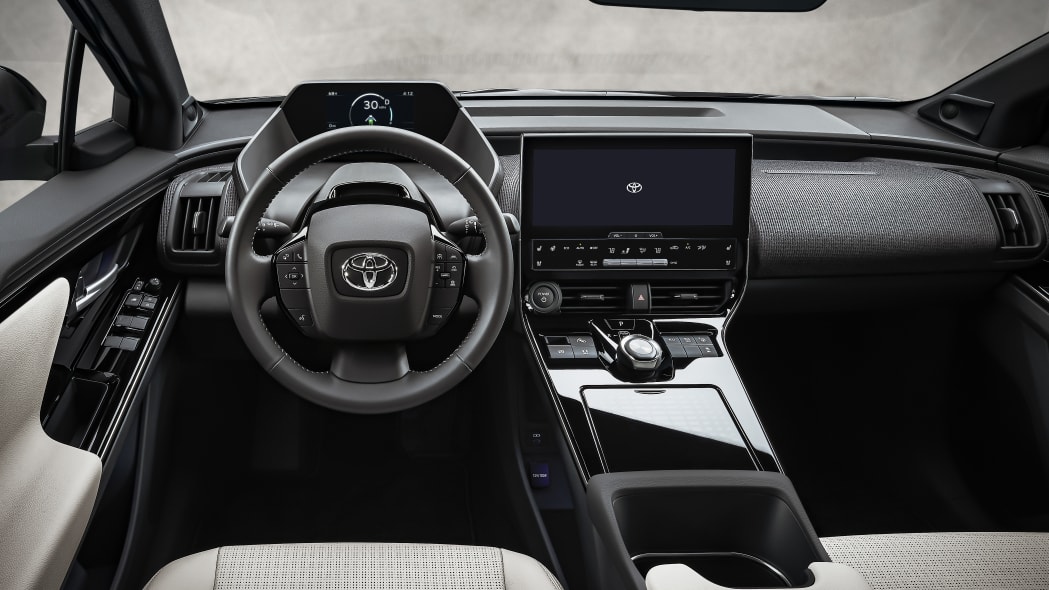
Other key details, like price and battery capacity, have yet to be released. However, the price could be somewhere in the high $30,000 to low $40,000 range. Like Toyota's offering, it's set to arrive in the US and other markets next summer.
from Engadget is a web magazine with obsessive daily coverage of everything new in gadgets and consumer electronics https://ift.tt/2Y5tDZ2
Amazon settles with employees allegedly fired over working condition criticisms
Amazon was supposed to defend its decision in court to let Emily Cunningham and Maren Costa go last year. The former Amazon employees were outspoken critics of the company, and both were, the National Labor Relations Board (NLRB) previously decided, illegally fired. The e-commerce giant didn't have to defend itself, however, because it has settled with the affected parties shortly before the hearing could take place.
Cunningham and Costa, who worked on user experience design, openly criticized Amazon's climate policies and workplace practices. They previously slammed the company's climate policies in a video that gained national attention. And before they were let go in April 2020, both of them tweeted that they'd match donations up to $500 to support their warehouse worker colleagues. Cunningham said the "lack of safe and sanitary working conditions" puts the workers and the public at risk, while Costa tweeted that the workers "struggle to get consistent, sufficient protections and procedures" from their employer.
Amazon said when the news broke that they were let go for violating internal policies, namely for discussing the company without prior approval, and not for speaking out about working conditions specifically. The NLRB looked into accusations that Amazon retaliated against its employees for organizing or participating in protests, however, and determined that Cunningham and Costa were illegally fired.
According to The Washington Post, the settlement still needs to be approved by the NLRB regional director in Seattle, though Cunningham and Costa are already considering the settlement a victory. In a joint statement, they said the development is a "win for protecting workers rights" and that Amazon will be required to pay them lost wages. The whole statement reads:
"We are thrilled to announce that we have reached an agreement to settle the charge against Amazon at the National Labor Relations Board (NLRB) alleging that the company illegally fired us for speaking up about warehouse workers' conditions during COVID. This is a win for protecting workers rights, and shows that we were right to stand up for each other, for justice, and for our world. Amazon will be required to pay us our lost wages and post a notice to all of its tech and warehouse workers nationwide that Amazon can't fire workers for organizing and exercising their rights.
It’s also not lost on us that we are two women who were targeted for firing. Inequality, racism, and sexism are at the heart of both the climate crisis and the pandemic.
Tech workers standing up together have immense power to move the biggest corporations in the world. Everything we love is threatened by climate chaos. Workers at every company need to be standing up for each other and the world, together. Now is the time to be our best, bravest selves. We can only do this together. We hope you’ll join us."
from Engadget is a web magazine with obsessive daily coverage of everything new in gadgets and consumer electronics https://ift.tt/2Y4f8Ep
Wednesday, 29 September 2021
Rachel Brosnahan's golden arm outshines the rest of Roku's Halloween lineup
Quibi tried and failed to create much of a buzz last year with its mobile video streaming service. But there was at least one thing from the ill-fated platform that went viral: a scene from a show where Rachel Brosnahan, of The Marvelous Mrs. Maisel fame, plays a woman with a golden arm. You'll soon be able to relive that moment of pop culture history thanks to Roku.
Losing my fucking MIND at this Quibi show where actual Emmy winner Rachel Brosnahan plays a woman obsessed with her golden arm pic.twitter.com/rSfqCv75SG
— Zach Raffio (@zachraffio) April 15, 2020
When Quibi closed shop, Roku bought the company's content and rebranded the shows as Roku Originals. It didn't re-release all of those series right away though, and it's marking Halloween season with three horror-themed Originals. First up as part of the Freak Out Friday season is When the Streetlights Go On, which hits The Roku Channel on October 15th. The '90s-set show centers on a double homicide that took place in a midwestern suburb.
The following Friday, you'll be able to watch anthology series 50 States of Fright. The first episode of that show is where you can hear a doctor tell a woman with a metallic arm that she has "pulmonary gold disease.” Quibi, in case you need a reminder, shut up shop less than eight months after it debuted.
Lastly, on October 29th, you'll be able to catch The Expecting, a sci-fi thriller that tells the story of a strange pregnancy. As well as on Roku devices, The Roku Channel is available on the web, Amazon Fire TV, mobile devices and some Samsung TVs.
In August, Roku added another 23 Quibi shows to its streaming library. The company is also working on its first original film, Zoey’s Extraordinary Christmas, which continues the story of the canceled NBC show Zoey's Extraordinary Playlist.
from Engadget is a web magazine with obsessive daily coverage of everything new in gadgets and consumer electronics https://ift.tt/3kQEfmQ
Elon Musk tells Jeff Bezos you can't 'sue your way to the Moon'
Elon Musk isn't fond of Jeff Bezos' Blue Origin, and he just made that patently clear. CNETreports that Musk told Code conference attendees Bezos should put more effort into "getting into orbit than lawsuits," and that you couldn't "sue your way to the Moon" as Blue Origin allegedly tried when it lost its lunar lander bid. He was also less-than-flattering to Virgin Galactic, describing its first passenger flight and Blue Origin's as "a step in the direction of orbit" that fell short of SpaceX's efforts.
While Musk is known for being harsh, he might have some support in this case. The Verge has obtained NASA legal documents showing that the space agency felt Blue Origin "gambled" with its originally proposed $5.9 billion lunar lander price. Bezos' company allegedly set the price far higher than necessary as it expected NASA to award the contract and negotiate for a lower cost. Blue Origin also reportedly assumed NASA would get the full funding from Congress needed for that initial price, even as the Senate made clear NASA wouldn't get the necessary amount.
You know what happened next. Rather than haggle the price, NASA picked the $2.9 billion SpaceX bid. Blue Origin challenged the award and even made a last-ditch $2 billion offer, but by then it was too late. The Government Accountability Office rejected Blue Origin's claims, saying NASA didn't violate regulations in picking SpaceX. Bezos' outfit took NASA to court roughly two weeks later.
In an interview, Blue Origin VP Megan Mitchell told The Verge the company rejected NASA's views. She felt Blue Origin made a "great offer" and that it disagreed with NASA's gambling characterization. The GAO separately said NASA partly botched its safety review requirements for the proposal, although it still sided with SpaceX on grounds that Blue Origin didn't explain how the move provided an unfair edge.
This isn't to say Musk and SpaceX are innocent. SpaceX sued the US in 2019 after it lost an Air Force rocket contract to Blue Origin and other competitors, for example. It's just that Musk's trash talking appears to carry some weight in this modern Moon race.
from Engadget is a web magazine with obsessive daily coverage of everything new in gadgets and consumer electronics https://ift.tt/2Ya2pjQ
Facebook will promote Instagram Reels in News Feed
Facebook’s TikTok clone is no longer just for Instagram. As of today, the social network is officially bringing Reels to the main Facebook app. With the change, users can create Reels directly from Facebook, and the company will recommend the short-form videos in all users’ News Feeds.
Facebook has been testing out various ways of bringing Reels out of Instagram for awhile, and began testing cross-posting features last month. Now, it’s also testing a feature that allows Reels creators on Instagram to promote their videos in Facebook’s News Feed directly, even if they don’t use the app.
Reels has become increasingly important to facebook and its efforts to challenge TikTok. The company has been steadily adding features to the service, and is attempting to lure creators with the promise of payouts for hitting certain milestones. Now, the company is adding a new "invite-only" bonus program to coincide with Reels' launch on Facebook and encourage creators to start posting on the social network.
Facebook
But it’s the potential challenge to TikTok that could be most significant for the company. Documents reported by The Wall Street Journal show that Facebook has been struggling to incentivize teens and younger users to post original content. Internally, the company is reportedly worried about ceding influence to TikTok, where teens spend much more time than on Facebook’s apps.
Promoting Reels in the main Facebook app, which is already not especially popular with teens, may not seem like the most direct way to solve that. But getting more eyes on users’ Reels will help the feature grow even if its top users don’t spend much time on Facebook itself.
from Engadget is a web magazine with obsessive daily coverage of everything new in gadgets and consumer electronics https://ift.tt/3zS1kdj
Sony's latest true wireless earbuds are only $100
Sony's flagship noise-cancelling headphones and tech-filled true wireless earbuds were refreshed with new 1000XM4 models in recent months. However, the company's more affordable options are still due for a refresh, and Sony begins that process today. With the WF-C500, the company offers a solid set of true wireless earbuds capable of handling immersive 360 Reality Audio for $100. And if over-ear noise-cancelling headphones are more your vibe, the WF-XB910N pairs ANC (active noise cancellation) with 30-hour battery life for $250.
The true wireless WF-C500 replaces the WF-XB700 at the bottom of Sony's price range. What's more, they're $30 cheaper than the XB700 was initially at $99.99. This substitution is a good thing because despite handling the basics well, the tiered design wasn't as ergonomic or comfy as the company suggested. With the WF-C500, Sony takes design cues from its high-end WF-1000XM4 earbuds. The result is smaller size and a more secure fit that should be more comfortable during hours of continuous use. And an IPX4 rating means you can use these during workouts without worrying about moisture damage.
Inside, the C500 is equipped with Sony's DSEE (Digital Sound Enhancement Engine) that restores some of the detail lost when music is compressed for streaming over Bluetooth. The company also allows you employ sound presets and adjust the EQ with its Headphones app. Plus, you have the option of listening in Sony's 360 Reality Audio if you're willing to splurge for the priciest streaming plan on select services (Amazon Music HD, Tidal HiFi, etc.). On-board controls give you the ability to manage music, adjust volume, take calls and activate a voice assistant without reaching for your phone. Lastly, the C500 will give you up to 10 hours of listening time with one additional charge in the included case. A quick-charge feature offers an hour of tunes in 10 minutes.
The WF-C500 is available for pre-order today, but colors vary by retailer. Sony will offer them in black, as will Amazon, Best Buy and Target. Exclusive colors include white (Amazon), green (Best Buy) and orange (Target). The earbuds are set to ship in October.
Sony
For the over-ear noise-cancelling crowd, the WH-XB910N replaces the WH-XB900N in the middle of Sony's headphone lineup. The price stays the same at $249.99, but the company offers a new design and improved ANC thanks to a Dual Noise Sensor. As the "XB" signifies, this model is equipped with the company's Extra Bass feature that amps up the low-end tone when activated. DSEE tech makes streaming over Bluetooth a bit more enjoyable by restoring detail lost to compression. The XB910N can also manage Sony's 360 Reality Audio content and employs Adaptive Sound Control, a staple of the company's pricier headphones, that can automatically adjust settings based on activity or location.
Sony is also angling at the remote working crowd here. The company explains that Precise Voice Pickup tech uses a combination of microphones and signal processing to amplify your voice on calls. There's also "a more natural listening experience" in ambient sound mode as Sony says the XB910N can pick up more of what's going on around you. That's handy whether you need to stay tuned in to what's going on either at home or in the office. On-board controls include Sony's quick attention feature which lets outside noise in when you place your hand over an earcup and there's a dedicated button to quickly change from ANC to ambient sound.
Sony says the XB910N will last up to 30 hours with the option of 4.5 hours of listening time after a 10-minute quick charge. To further cater to travelers, the company opted for soft, oval-shaped earpads for extra cushion and a design that folds flat for easy storage. If you prefer to save even more on your noise-cancelling headphones, the excellent WH-CH710N will stick around and are currently $98. Although they lack a lot of the handy features from Sony's other models, the noise-cancelling CH710N are light and comfy, handling the basics very well for that price.
The WF-C500 is available for pre-order today, and once again, the colors vary by retailer. Sony will offer them in black, as will Amazon and Best Buy. Exclusive colors include blue (Amazon) and gray (Best Buy). The headphones are scheduled to ship in October.
from Engadget is a web magazine with obsessive daily coverage of everything new in gadgets and consumer electronics https://ift.tt/3ASxNRT
FoggyWeb malware latest tool of dangerous Nobelium APT
from ComputerWeekly.com https://ift.tt/3mdRVYL
Rolls-Royce plans to stop making gas-powered cars by 2030
Another major automaker has revealed plans to move entirely to electric vehicles within the next decade. Rolls-Royce is the latest one to make the pledge, following other luxury brands such as Jaguar, Lincoln and Bentley.
Spectre, Rolls-Royce's first EV (and one that sounds like it's rolling off the set of a James Bond film), will arrive in the last quarter of 2023. The BMW brand plans to start testing the vehicle soon, according to Reuters. Rolls-Royce teased the EV in some images, but it literally kept the Spectre's design under wraps.
Rolls-Royce
Rolls-Royce CEO Torsten Muller-Otvos said that by 2030, the automaker "will no longer be in the business of producing or selling any internal combustion engine products." Sibling brand Mini has made a similar pledge. Parent company BMW has not set a date for making a full switch to EVs, though it aims to move half of production to electric models by the end of this decade.
from Engadget is a web magazine with obsessive daily coverage of everything new in gadgets and consumer electronics https://ift.tt/3zN0grb
Jeep's Grand Cherokee plug-in hybrid will arrive in early 2022
As promised, Jeep has detailed its first Grand Cherokee plug-in hybrid. The company has confirmed the Grand Cherokee 4xe will arrive in North American dealers in early 2022, and will sport more capabilities than you might have expected. The estimated 25 miles of all-electric driving (440 miles total) won't necessarily cover your entire commute, but Jeep is promising a rough-and-ready PHEV that can climb hills without touching the 2.0L turbo gas engine. You can also drive in a full hybrid mode for peak performance and an "eSave" mode to preserve the 17kWh battery for later.
You can also expect new technology inside, such as 10-inch front and rear passenger displays with built-in Fire TV — your kids can stream Prime Video in the backseat. The driver, meanwhile, gets a 10-inch display with a much faster Uconnect 5 platform that supports over-the-air updates.
The 4xe and its regular counterparts are improved off-roaders with semi-active damping for air suspension as well as a front-axle disconnect when the SUV senses it doesn't need all-wheel drive. You'll also get semi-autonomous help through an optional Active Driving Assist system that takes over so long as your hands are on the wheel and your eyes are on the road. Jeep is promising a 6,000lbs maximum towing capacity.
Jeep hasn't divulged pricing for the Grand Cherokee 4xe, although it will be available in increasingly loaded Limited, Trailhawk, Overland, Summit and Summit Reserve editions. It's already safe to say this is an important vehicle for the brand, though. Parent company Stellantis is racing to catch up with rivals in electrifying its vehicles, with plans for a fully electric version of every SUV by 2025. The plug-in hybrid is a critical first step in that direction.
from Engadget is a web magazine with obsessive daily coverage of everything new in gadgets and consumer electronics https://ift.tt/3omTNRx
UK government announces industry group to lead digital pound debate
from ComputerWeekly.com https://ift.tt/3m8ggPt
AWS courts local councils across UK and Ireland with three-month free cloud services trial offer
from ComputerWeekly.com https://ift.tt/2XZtrtA
YouTube bans all content containing vaccine misinformation
YouTube has banned all videos containing misinformation about vaccines that are currently administered and have been approved by local health authorities or the World Health Organization. The measure is an expansion of a policy covering COVID-19 vaccines.
The service says that users shouldn't, for instance, post videos in which they claim that vaccines lead to chronic side effects (other than rare side effects that health authorities have acknowledged); content that alleges vaccines don't reduce transmission or contraction of diseases; or videos that have inaccuracies about vaccine ingredients.
There are some exceptions. YouTube "will continue to allow content about vaccine policies, new vaccine trials and historical vaccine successes or failures." Users can also share scientific discussions of vaccines and personal testimonials about their experiences, as long as they don't have a history of promoting vaccine misinformation and their video complies with YouTube's other rules. Posting videos that "condemn, dispute or satirize misinformation" that violates YouTube's policies should be okay too.
YouTube told the Washington Post that it's taking down channels linked to prominent anti-vaccine advocates, including Joseph Mercola and Robert F. Kennedy Jr. The reason it didn't move to ban all anti-vaccine content sooner is because it was focusing on COVID-19 vaccine misinformation.
“Developing robust policies takes time,” YouTube’s vice president of global trust and safety Matt Halprin told the publication. “We wanted to launch a policy that is comprehensive, enforceable with consistency and adequately addresses the challenge.”
YouTube, as well as Facebook and Twitter, banned COVID-19 misinformation in the early days of the pandemic in the spring of 2020. YouTube has removed more than 130,000 videos that broke its rules about COVID-19 vaccines, which it announced last October, and more than a million videos in total that included coronavirus misinformation.
Meanwhile, Facebook has been working to reduce the spread of anti-vaccine content since at least 2019. It formally banned vaccine misinformation in February.
from Engadget is a web magazine with obsessive daily coverage of everything new in gadgets and consumer electronics https://ift.tt/2XVX7Ic
Intense rhythm game 'Thumper' comes to Apple Arcade on October 1st
Apple is adding another classic game to Arcade's repertoire, albeit a relatively recent one. Drool's "rhythm hell" title Thumper: Pocket Edition will be available through the all-you-can-play subscription service starting October 1st for iPhone, iPad and Mac gamers. The mechanics will be familiar if you've played the title on one of its many other platforms, but that doesn't make it any less intense — you're barrelling through a rhythm course at high speed, with precious little room for error.
The addition represents a familiar strategy for Apple. It's counting on recognizable and sometimes exclusive Arcade games to reel in subscribers and boost its increasingly important services business. Not that you'll necessarily mind. Thumper normally costs $5 by itself, so this might tip the balance if you were already considering Arcade or an Apple One bundle.
from Engadget is a web magazine with obsessive daily coverage of everything new in gadgets and consumer electronics https://ift.tt/39LnLpQ
Valve is reportedly working on a standalone VR headset
Brad Lynch, a YouTube host who reports on virtual reality, has found evidence from patent applications and other sources that Valve is currently working on a standalone VR headset codenamed "Deckard." Ars Technica has independently confirmed that the company is indeed developing a device with that codename.
Lynch found references to multiple iterations of Deckard, including a "proof of concept" in June. Valve is apparently planning to give it the ability to bring up two SteamVR menu options: prism and standalone system layer. The latter, as you may have guessed, implies that the device could work on its own without the need to be tethered to a PC. If you'll recall, Valve's Index VR headset released in 2019 has to be attached to a computer to work. The YouTube host also discovered a mention of Deckard in a SteamVR Linux ARM binary. That particular evidence hints at processing power built into a Valve VR headset, further solidifying the possibility that it's a standalone device.
According to Ars Technica's sources, Valve was developing two design concepts for a virtual reality headset. One of them ended up resembling the Index in that it needs to connect to a PC and to SteamVR Tracking Boxes. The other ended up being designed around a built-in processor with inside-out tracking like the Oculus Quest. Those sources also hinted that Valve had to bring in an outside firm to develop inside-out tracking that could match what the Quest can do.
Whether the standalone VR headset will ever be released remains to be seen. As the publication notes, Valve is already preparing to start shipping the Steam Deck in December. With the current chip shortage affecting the tech and auto industries today, we may have to wait quite a bit for Deckard if Valve decides to release it at all.
from Engadget is a web magazine with obsessive daily coverage of everything new in gadgets and consumer electronics https://ift.tt/3ik2Fn4
Women in fintech welcome Barclays initiative and demand more from the sector
from ComputerWeekly.com https://ift.tt/3m6yocx
The Morning After: Amazon reveals its periscope-equipped Alexa robot
Amazon’s annual barrage of new Echo hardware didn’t disappoint, ranging from role-playing games to nutrition tracking, drones and videocall devices for kids. I think the new 15-inch Echo Show, a smart screen to mount on your wall, was the most intriguing reveal.
Amazon
Amazon has redesigned its home screen to make the most of all that extra display space, and you can customize it so part of the screen scrolls through ambient content, like headlines and weather updates. Aimed at families, the Echo Show 15 also has a new visual ID feature that can recognize your face and show you personalized information, like calendar appointments, reminders and notes.
Amazon and Google dominate the smart displays space, and I might be the rare exception of having not a single Alexa-powered device in my home. So far, Amazon’s devices haven’t offered anything particularly compelling for me. I have a Google smart display, which smoothly integrates with Google Calendar, Google Maps and the rest. It’s hard for me to generate much enthusiasm for the Echo range.
Now, having said that, let me contradict myself entirely.
If you like your Alexa devices on wheels and with precarious extendable, periscope cameras, then perhaps Amazon’s Astro robot might get you excited. (Or worried.) Amazon plans to sell its first robot in limited quantities later this year. It will eventually cost $1,450, but as part of its Day 1 Editions program, the company will sell the robot at an introductory price of $1,000.
— Mat Smith
All the big Amazon news
Amazon's Blink unveils a no-frills $50 video doorbell
Amazon's Alexa-enabled Smart Thermostat only costs $60
Amazon takes on Apple with fitness and nutrition services for Halo devices
Everything Amazon announced at its September hardware event
Amazon Glow is a kid-focused video call device with interactive activities
IKEA’s new customizable Sonos speaker lamp launches October 12th
Starting from $169, depending on the shade.
IKEA
IKEA and Sonos’ new, more customizable version of their Symfonisk speaker lamp arrives on October 12th. The furniture giant will sell the new model's lamp base and shade separately, so you can mix and match parts to ensure the final product fits the vibe of your home.
IKEA’s Stjepan Begic said they decided to make the base smaller after finding out a lot of people use the Symfonisk lamp on their nightstand. You’ll be able to choose between two types of shades: textile or glass, while the lamps themselves come in black or white. The new model also supports a wider range of bulbs, thanks to a different E26/E27 socket.
You can now sign up to test Ring’s home security drone
The invitation-only program will help refine the technology.
Ring says its Always Home Cam, its first home security drone, will soon arrive in select households. Users will be able to sign up to join an invite-only testing program to help refine the hardware before it hits shelves. In the US, at least, Ring owners can sign up to help develop what its makers are calling a “very ambitious device.”
Microsoft CEO: TikTok negotiation 'strangest thing I've ever worked on'
I doubt any of us are surprised.
This time last year, ByteDance was trying to save its TikTok app in the US and elsewhere after Donald Trump's administration threatened to ban it. One potential savior was Microsoft.
It was a mess. It all started when Trump threatened to force Chinese company ByteDance to sell TikTok to a US owner, citing privacy and security concerns. Microsoft stepped in as a potential buyer, though the company, in the end, struck a deal with Oracle and Walmart, which President Joe Biden's administration scrapped in February 2021.
Microsoft was in the middle of negotiations with ByteDance when Trump told reporters he'd rather ban the app than allow it to be sold to a US company. That "threw into disarray the careful negotiations we had pursued with ByteDance” to buy TikTok’s business in the US and the three other countries, CEO Satya Nadella wrote. Trump only relented and allowed a deal to happen after Nadella called him personally.
After Oracle's winning bid, ByteDance said Trump had "ghosted" the site, effectively going silent after ordering the company to divest its US TikTok assets.
Amazon's 'New World' MMORPG is finally here
It’s very, very important for Amazon Game Studios.
After four delays spanning nearly a year and a half of missed release dates, New World is finally here, available to Steam and Amazon’s own marketplace, starting at $40. The MMORPG will be crucial to Amazon Game Studios’ future. After the very public failure of Crucible, which it terminated not too long after its launch, the company needs to prove it can deliver compelling games — and keep them going. Hopefully, all those delays have ensured New World arrives with its best foot forward.
The biggest news stories you might have missed
BloodyStealer trojan targets Steam, GOG and Epic accounts
Apple says the iPad mini's 'jelly scrolling' problem is normal
Logitech's MX Keys Mini is a compact keyboard for minimalists
1Password can now randomly generate email addresses for logins
Facebook's 2Africa to become the longest subsea cable in the world
Xbox Series X/S consoles now support Dolby Vision for gaming
Apple beefs up Keynote, Pages and Numbers with new features
from Engadget is a web magazine with obsessive daily coverage of everything new in gadgets and consumer electronics https://ift.tt/3kQJBi3
Riskier business: How Brexit could be changing downtime risk and resilience in the datacentre
from ComputerWeekly.com https://ift.tt/39QBRX7
Amazon's biggest innovation is being cheap.
As Amazon’s executives took the stage one after another yesterday to introduce the world to the company’s “next big leaps forward,” a sense of deja vu crept up on me. It only grew stronger as the event progressed, with many new Amazon products seeming incredibly familiar. The company has been criticized in the past for borrowing designs of popular goods and selling them for a lot cheaper.
That’s not an uncommon practice of course — massive retailers all over America like Walmart and Costco have offered lower-cost store-brand lines forever. But none of them stage flashy keynotes to tout their products as “innovations.” While Amazon has indeed brought certain unique technologies to the world in the past, this year the company’s “innovations” seemed to be more of it doing what it does best: undercutting the rest.
Halo View: Twinning with Fitbit
With the Halo View, Amazon is essentially adding a display to its existing screenless health-tracking band. But the View’s shape and style are so similar to Fitbit’s Charge series it’s hard to differentiate the two. Sure, there are only so many ways you can stick a rectangular display on a wristband, but Amazon’s mimicry doesn’t stop there. It also introduced new Halo Fitness and Halo Nutrition services today that will offer guides on working out and eating better.
Amazon
That’s basically Fitbit Premium, which offers guides on working out and eating better. Oh and Fitbit’s $10-a-month service also provides tips on meditating and sleep. Amazon’s subscription costs just $4 per month after a trial period, though, and the $80 Halo View is $100 cheaper than the new Charge 5. The View probably won’t do as much as Fitbit’s trackers, which are quite sophisticated. Still, considering the price, Amazon will likely sell a lot of them.
Amazon Smart Thermostat: Lose the frills for a fraction of the price
Amazon teamed up with existing thermostat brand Honeywell to make a Smart Thermostat that will work with most existing 24V HVACs (most common for residential HVAC systems). You can control it with a separate Alexa-enabled device and set custom routines for heating and cooling. The company hasn’t released much more information about its thermostat yet, but from what we can see, the device has the rounded-rectangle shape of an ecobee smart thermostat with the color scheme of a Google Nest product.
Lots of existing smart thermostats by brands like ecobee, Sensibo and Google’s Nest do more things, but Amazon is seriously undercutting the competition by selling its version for just $60. The Nest Thermostat that was launched last year costs $130, while an ecobee 3 Lite goes for $170.
Blink cameras: Competing with Google for much cheaper
Competition in the security camera space is pretty stiff, so it isn’t very surprising that Amazon and Google both borrow a lot from each other. Amazon unveiled a new $50 Blink video doorbell camera today, alongside a set of outdoor cameras. One of these is the $40 floodlight camera mount that calls to mind Google’s Nest Cam with integrated floodlight. To be fair, though, Google did only introduce a wireless, battery-powered doorbell camera after Blink, so it appears the borrowing is mutual here.
The difference, however, is once again in pricing. Blink’s video doorbell is less than a third of the price of the $180 Nest Doorbell. Google’s floodlight-cum-security camera is $280, while Amazon’s mount (with a camera) is half that at $140.
But at what cost?
It’s no secret that Amazon’s business model has a lot to do with knowing what people want and changing their prices accordingly. But how can it make things so cheap? In addition to pure economies of scale and multiple reports of questionable (at best) labor practices, the company also offers goods at reduced prices in exchange for sticking ads on your devices. The ad-supported versions of Kindles and Fire tablets often go for $20 to $30 less than their stock counterparts.
With the breadth of devices Amazon offers, too, the sheer amount of data it could collect purely for the sake of selling you stuff is huge. With the smart thermostat, it could detect a dip in temperature in your region and suggest you buy from its in-house brand of winter wear. Or maybe your child’s been reading a book on a Kindle, and the company later serves ads for collectibles from that title on its new kid-centric Glow video-calling device. Or how about a subsidized version of the Astro robot that roams your house or follows you around with an ad on its face? Amazon also talked about a “vision of ambient intelligence” — which sounds very similar to the concept of “ambient computing” expounded by Google for years. But because Amazon’s products are so much cheaper, it could succeed at stuffing Alexa in so many more places in our lives.
Plus, with all the data it’s gathering from your shopping habits, whether it’s on one of its devices or the Amazon app, the company can afford to sell you something at a lower profit margin. The company said in its privacy notice that it’s “not in the business of selling our customers' personal information to others.” But it’s presumably using that data to understand the types of things you’re more likely to buy and put that stuff in front of you. It’ll probably make more off of you in the long run if you’re using the cheap Fire tablet to browse its store.
Of course, this doesn’t mean that everything Amazon unveiled today was a cutrate version of something else. We got an update on the Ring Always Home Cam, which was first announced last year. You’ll soon be able to sign up to test it out. The home security device is a little drone that can fly around your property at your command to see if anything’s amiss. No mainstream tech giant has launched something similar yet, though, so Amazon isn’t undercutting anyone on this.
Still, it seems like the company’s strategy for its flagship products is similar to that of its Basics line: Take a good idea, tweak it and sell it for loads cheaper. It’s not terrible; We could always use affordable, reliable devices. But Amazon is not innovating: It’s the Costco of consumer tech.
Follow all of the news from Amazon’s fall hardware event right here!
from Engadget is a web magazine with obsessive daily coverage of everything new in gadgets and consumer electronics https://ift.tt/3CQwzak